Monday, April 30, 2007

4 hour workweek, truth or illusion?

The book that changed my life in 2 hours: The 4-Hour Workweek

from I Will Teach You To Be Rich by Ramit Sethi

There’s a time-sensitive giveaway at the end of this post.

Reading “The 4 Hour Workweek
is like having Tim Ferriss grab you by the hair, shake you, and say
WHAT IS WRONG WITH YOU!?! YOU NEED TO USE THESE TIPS TO BE MORE
EFFICIENT!! Also, the tips work. GTD fans, entrepreneurs, and basically
anyone who reads this site will learn tons from The 4-Hour Workweek.

I absolutely loved this book. In fact, within 2 hours of reading it,
I had completely changed the way I handle email — and I already thought
I was efficient.

Three days later, I had changed the way I handle followups and
meetings. The book is about creating an infrastructure so you can work
only 4 hours a week (a colorful metaphor) and use your time to serve
you, instead of the other way around. Tim’s insights about email,
outsourcing, and business use take it to a new extreme. For example, he
suggest checking your email twice a day. Now, I’ve heard this
suggestion before, but usually it was a failure of the last mile for me: I didn’t know where to start.

Tim goes the extra step and provides the text of the auto-response
email he uses, which basically says ‘I check my email infrequently, so
here’s an FAQ you can read that will probably answer your questions.
Otherwise, here’s my phone number, or be patient and I’ll get back to
you.’ And, in the smartest line in the book, his autoresponder includes
this line: “Thank you for understanding this move to more efficiency
and effectiveness. It helps me accomplish more to serve you more.”

Who could argue with that?

Do you remember when I described how I set up my financial accounts?
That article was one of my most popular because it described,
step-by-step, how my personal-finance infrastructure worked. Tim
describes that for his entire working style, including something
fascinating I had never really considered: virtual admins. (See a related Friday Entrepreneur review here.)

He uses multiple virtual admins from around the world. As he writes,
“Indian and Chinese VAs…will run $4-$15 per hour, the lower end being
limited to simple tasks and the higher end including the equivalent of
Harvard or Stanford M.B.A.s and Ph.D.s.” Then he goes on to describe exactly
how to work with virtual admins, including how to give instruction, how
to pick the best ones, and — this goes the extra mile — the best URLs
for finding virtual admins.

Why would you need a virtual admin? Think about all the mindless
things you do every month: Booking reservations, calling up Wells Fargo
to question some account activity, researching some minor point,
writing a complaint letter, proofreading, scheduling, reminders, and
more.

Frankly, when I first thought about it, it sounded ridiculous. But
then I thought about things like scheduling things and dealing with
tons of tiny requests every month (”Fix that typo on that site!”), I
realized how great it would be to be able to just send a quick email to
a virtual admin to handle it — especially if they were good. This
advice (and the links provided to the best admin sites) are worth the
price of the book alone.

There’s more in the book. Here are some the other key insights I took away:

  • “Don’t ever arrive at the office or in front of your computer
    without a clear list of priorities. You’ll just read unassociated
    e-mail and scramble your brain for the day.” (This alone has saved me
    about 35 hours since I finished the book 2 weeks ago.)
  • “Being busy is a form of laziness–lazy thinking and indiscriminate action”
  • How to end a meeting on time
  • How to convince your boss to let you work at home on Fridays
  • And a great lesson he illustrates:

    “For all four years of school, I had a policy. If I received
    anything less than an A on the first paper or non-multiple-choice in a
    given class, I would bring 2-3 hours of questions to the grader’s
    office hours and not leave until the other had answered them all or
    stopped out of exhaustion. This served two important purposes:

    1. I learned exactly how the grader evaluated work, including his or her prejudices and pet peeves
    2. The grader would think long and hard about ever giving me less than
    an A. He or she would never consider giving me a bad grace without
    exceptional reasons for doing so, as he or she knew I’d come a’knocking
    for another three-hour visit.

    Learn to be difficult when it counts. In school as in life, having a
    reputation for being assertive will help you receive preferential
    treatment without having to beg or fight for it every time.


Tim is kind of a weird playboy. In fact, for half of the book,
you’ll be shaking your head saying “Is this guy for real?” He’s a
Guiness record-holder in Tango, a national champion in kickboxing, and
runs a business that makes supplements “scientifically engineered to
quickly increase the speed of neural transmission and information
processing,” which makes me more than a little suspicious. Some of the
tactics he recommends are frankly sleazy. And other people have
wondered if he has a real job besides self-promotion; Tim admits in his
book that he was fired from most of them.

But I’ve met him and I liked him. Also, even though this book is in
some ways opposite of my philosophies on personal finance — he’s not a
big fan of saving for retirement — I have to respect him for thinking
through his position and teaching me concrete things that I put to work
within a matter of hours.

He embraces entrepreneurship and uses the book to share street-smart
tips for simplifying your life, automating your work, being more
effective with your email/communications, cutting down on
interruptions, and using your time to actually achieve something
meaningful. I can’t recommend this book enough. In fact, if the highest
praise you can give a book is that you changed the way you do things
because of it, then this book gets a great review.

Sunday, April 29, 2007

Notes from a Postit

Found this slip of PostIt while looking for a screw driver. It must be written long time ago. I don't even remember what the numbers and dates stand for.
It's like a time capsule, but seems to fit well with all those sentimental memoirs written for the THU 96th anniversary.

Without further delay, here it is:"
改变1995
人之所以留恋过去,是因为过去是已知的,安全的。
而未来却前途未卜,所以世道越动荡不安,人就越怀旧。

怀旧也是一种软弱。世界上的大部分悲剧,都产生于软弱的人。

72155x32

"

Am I being nostalgia by posting this time capsule? Am I weak? Maybe.

Saturday, April 28, 2007

时代的错误

今天在一本书上看到作者的简历,说他高中毕业后,被分配到新疆生产建设兵团。“兵团”这个词让我想到父辈的那个时代。


大伯从华师毕业以后,自愿支边,去了新疆生产建设兵团,在那里结婚,生子,当了十几年中学老师。到不惑之年才调回武汉。我突然很想知道,当他回忆自己年轻时的选择,是怎样的心情?是义无反顾,还是会有一丝遗憾,或者是一种被时代的大潮所席卷的无力?

人生的种种选择,是时代与命运的安排,还是个体自由的意志?

如果成功了,自然不必问这些,发奖还来不及。但是如果失败,又归咎于谁呢?区区一句“这是一个时代的错误”,让多少人得以为自己的选择释怀。

殊不知,哪个时代没有错误?

为什么我们的长辈就那么确定,我们比他们赶上了更好的时代?人类社会本来就不是直线进步的。美国人对自己生活质量的调查,是60年代的人最为满意。

Thursday, April 26, 2007

book reviews from google reader

Pluralistic ignorance is a fascinating concept in social psychology.
It’s a phenomenon “which involves several members of a group who think
that they have different perceptions, beliefs, or attitudes from the
rest of the group” (more). For example, Prentice and Miller, two Princeton social psychologists, found that college students tend to think other students drink more than they actually do. Schroeder and Prentice noted
that “the majority of students believe that their peers are uniformly
more comfortable with campus [drinking] than they are.” This means that

“…because everyone who disagrees behaves as if he or she
agrees, all dissenting members think that the norm is endorsed by every
group member but themselves. This in turn reinforces their willingness
to conform to the group norm rather than express their disagreement.
Because of pluralistic ignorance, people may conform to the perceived
consensual opinion of a group, instead of thinking and acting on their
own perceptions” (source)


I find this time and time again when I talk to my friends. People
will say things like, “Everyone’s earning $70,000/year when they
graduate, so I should, too.” Or “nobody lives with their parents so it
would be embarrassing if I did.” We often make decisions based on what
we see of our friends, but we don’t see the bigger picture and realize
the differences in internal attitudes and behaviors across individuals
and groups. Pluralistic ignorance colors our decision-making and the
worst part is, we don’t even know it.

That’s why I like the new book by Penelope Trunk, Brazen Careerist: The New Rules for Success.
Penelope writes for the Boston Globe and Yahoo Finance (she’s covered
me before), and she has an attitude. I mean that in a good way: Unlike
so many books for young people, this one reads like a real person wrote
it, not a damn robot. You can actually hear her in her writing. Now,
she and I disagree about some career-related things, but she does a
great job explaining her reasoning.

And her advice is good. She talks about issues we care about –
living with our parents, getting our first job, negotiating salaries,
starting a company, how to make ends meet – but reassures us that the
things we feel guilty about are actually very common (see my thoughts about young people and guilt here).

For example, she writes that “Job-hopping in your early twenties is
a great idea – especially if you’re still sleeping at your parents’
house. After all, the point of this period in life is to find the right
work for you. But if the job-hopping doesn’t stop by age thirty, the
feeling of instability intensifies to crisis.” How many of your friends
don’t know what they want to do, but feel pressured to pick one single
job and focus on it?

I know plenty. I also know plenty of friends who don’t know what
they want to do, so they go back to grad school. Penelope shows a
better way to think that decision.

That’s what’s interesting about the book: It includes not only
advice on how to think about large, ambiguous topics like going back to
grad school and office politics, but also includes tactical advice
that’s actually good. When it comes to creating your resume, for
instance, she writes,

One page. That’s it. I don’t care if
you are the smartest person on earth or if you have founded six
companies and sold each of them for $10 million. The point of a resume
is to get you an interview, not a job.”


She writes excellent tactical advice for building your cover letter,
negotiating your salary, writing a resume that stands out (“Ditch the
line about references on request. It’s implied. Of course if someone
wants a reference, you will give one”).

But more than tactical advice, she uses research from places like
Harvard Business School – not just her personal opinions – to remind us
not to feel guilty about what we’re doing. For instance, did you know
that 50% of the Class of 2003 was still living at home 3 years later?

This book reminds me to stop fighting against the same things that
everyone else my age is struggling with. If I wanted to live at home so
I can afford to take a low-paying job that I love, that chapter on
living at home would be worth the book alone. In other words, stop
worrying and feeling guilty about what other people think and focus on
the important goals. The best thing a book can do is reassure us,
refocus us, and then give us the tools to do more than we thought we
could do. This book is a great start.

Brazen Careerist isn’t perfect, of course. It’s overly list-y for my
tastes, reading in some parts like a “Top 10 Reasons to…” blog post.
Also, the book is itself a bit unfocused, with points on starting your
own business, perfecting your resume, working with your manager,
optimizing your personal life, and doing yoga (?). But the number of
insights I got from the book made up for it.

A few things that stood out to me:

  • The importance of telling stories on page 52 is absolutely 100%
    true. So many people take the engineering-esque mindset of “If I just
    explain my accomplishments, they’ll understand.” Wrong. Craft a story
    and you win.
  • A controversial and pointed suggestion about harassment on page 123
    (“Use harassment to boost your career”). I don’t know what I think
    about this, but I’m curious to see others’ reactions.
  • A pointed reminder to ask your company to pay for your training on
    page 178. Not only will you be more valuable to your company, your
    career will be enhanced. It just takes you asking.
  • One more thing: What the hell is wrong with young people being
    afraid of using the phone? One of my stupid friends lost his Wells
    Fargo password and looked completely helpless. “Hey idiot,” I told him,
    “why don’t you just call them and get your password?” “Umm…,” he said
    like a beaten, sad man, “it’s not that important. I’ll just wait until
    I go in there next time.” On page 42, Penelope lays out why to use the
    phone. Key point: “You can’t lose making a cold call. No one ever says
    to themselves, ‘I wish I hadn’t been so aggressive in trying to get
    what I wanted.’”)

The book is good. So is the blog. And Penelope is a great woman with tons of interesting thoughts about career issues.

a dash of methyl jasmonate in your daiquiri might leave you healthier

Antioxidants in Berries Increased by Ethanol (but Are Daiquiris Healthy?)


Category: Chemistry
Posted on: April 24, 2007 9:10 AM, by Shelley Batts

daiquiri.bmp From the BBC on down, in the past few days the headline "Alchohol Makes Fruit Healthier" has been highlighted in nearly every news venue.

The fruit contains compounds [antioxidants] that can protect against cancer, heart disease and arthritis.

But having them with alcohol, such as in a daiquiri, boosts these
antioxidant properties, the Journal of the Science of Food and
Agriculture says.

Nutritionists said the "detrimental effects" of such drinks could cancel out such benefits.


As a college student, no one takes this sort of study more seriously than I. Alcohol as health food? Surely you jest!

This deserved a bit more investigation.

The study that all these 'blurby' news briefs are referring to is a
brand-spankin'-new paper published in the Journal of the Science of
Food and Agriculture entitled 'Natural volatile treatments increase free-radical scavenging capacity of strawberries and blackberries'
by Chanjirakul et al. Quite the mouthful (forgive the pun). The paper
was a collaboration between the USDA Fruit Labs and Produce Quality
Labs, and the Dept of Horticulture in Thailand.

As many people know, certain fruits contain large amounts of
healthful compounds called antioxidants which "scavenge" cell-damaging
free-radicals in our bodies. Strawberries and blackberries fall into
this category, both naturally containing high amounts of antioxidants
such as anthocyanin and phenolic acid. These compounds interact with
reactive oxygen species (ROS), which are byproducts of metabolic
processes, and prevent them from damaging DNA and cells.

The other side of this is that improving the antioxidant levels in
fruit not only increases healthful benefits to the people that ingest
them, it increases the shelf life of fruit by slowing down decay. So
obviously there is interest in getting fruit to last longer and
reducing waste and allowing increases in transit time.

So the researchers tested whether treating strawberries and
blackberries with natural volatile compounds (methyl jasmonate, allyl
isothiocyanate, ethanol, and tea tree oil) would be effective in
reducing decay in the berries. Natural volatiles occur naturally in
some fruits, and were thought to have evolved as an antimicrobial and
antifungal defense mechanism. But would they increase antioxidant
activity as well?

The method was simple. Include a piece of soaked blot paper
(saturated with a natural volatile) within a closed container of
berries and wait 7 and 14 days at 4 degrees C. Antioxidant levels were
examined before and after, and decay was measured visually. Results of
treatment conditions and decay are below.

chart%20ethanol%201.bmp

Compared to controls, allyl isotholcyanate treatment resulted in
the least decay in both berry types. Ethanol treatment provided the
least protection against decay.

As for antioxidant activity, that was measured by 'ORAC' test
(Oxygen Radical Absorbance Capacity, no not Orac). Results are below,
which show that compared to controls, all the natural volatiles except
the allyl isotholcyanate provided modest increases in antioxidant
activity. Methyl jasmonate treatment provided the largest increase in
antioxidant activity (see below).

orac%20score.bmp

The group tested the quantities of specific reactive oxygen species
and, overall, consistently found that methyl jasmonate treatment
provided the best protection against ROS but that the other natural
volatiles (ethanol included) provided some beneficial effect too. Take
home message was that a combination of methyl jasmonate (to increase
antioxidants) and allyl isotholcyanate (to reduce decay) would maximize
shelf life.

So really, a dash of methyl jasmonate in your daiquiri might leave
you healthier, but I can't say what that would do for the taste and fun
of your beverage.

Long horn, vista, nowhere


Survey: 30% Of Businesses Have No Plans To Upgrade To Windows Vista, Ever


Concerns about compatibility and cost are driving less-than-stellar adoption rates, despite security enhancements in the new OS.


By
Paul
McDougall


InformationWeek


April 25, 2007 02:00 PM


In the latest sign that Microsoft's Windows Vista operating system
may be destined for less than overwhelming commercial success, a new
InformationWeek survey has found that nearly one third of businesses do
not plan on upgrading their computers to the much-hyped software.

Tech professionals at the businesses surveyed were asked the
following question: "When, if ever, does your company plan to purchase
and install Windows Vista?"


One quarter of the 612 survey respondents said they were already using
the new OS; 13% said they would do so in the next 12 months, while 27%
said their companies would adopt Windows Vista more than one year from now.


But in what will surely be viewed as disappointing news at Microsoft
headquarters in Redmond, WA, a full 30% of those surveyed said they had
no plans to upgrade their systems to Windows Vista -- not ever.


"While security enhancements remain the primary reason for companies to
adopt Windows Vista, concerns about compatibility and cost are still
out there," wrote survey author Lisa Smith, InformationWeek's managing
editor for research.


Indeed, Windows Vista compatibility issues are causing numerous headaches for Microsoft and its tech industry partners.


A number of major federal agencies, including NASA,
the U.S. Department of Transportation, and the Federal Aviation
Administration, have all decided to forego -- at least for now --
moving their desktop systems from Windows XP to Windows Vista, in part
because some of their current business applications won't function
properly on the OS.

Some prestigious universities, such as MIT and Stanford, have
also shelved Windows Vista upgrades until compatibility issues can be
resolved.


Meanwhile, consumer demand for Windows XP -- Windows Vista's predecessor -- recently forced computer maker Dell to reintroduce the older Microsoft operating system as an option on its home systems.


Dell provided few details about the move, but many PC buyers have
reported serious compatibility issues between Windows Vista and their
favorite applications and hardware products.


One disgruntled tech enthusiast recently established a Web site with an eye to garnering support for a class action suit against graphics card
manufacturer Nvidia. The consumer, Dan Goldman of New York City,
charges that Nvidia's claim that its products are Windows Vista
compatible are false.


What's behind Vista's compatibility gap? Microsoft has acknowledged that rewriting Windows XP applications for Windows Vista is a more difficult task than what faced independent software developers when they had to port their products to Windows XP from Windows 2000 and Windows ME in 2001.


The trouble is in part due to advanced Windows Vista security features
like BitLocker and the User Account Control -- designed to prevent
users from changing their desktop footprint without approval from an IT
administrator. Coding applications to work with those features can be
tricky, Microsoft has said.


Heavy system requirements may also be causing business and consumers to
shy away from Windows Vista, at least for now. To experience all of
Vista's features, PC users need a computer with at least a 1-GHz
processor, 1 Gbyte of memory, and a 40-Gbyte hard drive. That's far
beyond what's required for routine business computing tasks like word
processing, running a spreadsheet, or sending e-mails.


By contrast, Windows XP Professional requires only a 300-MHz processor, 128 Mbytes of RAM, and a 1.5-Gbyte disk.


Businesses may thus see little reason to buy expensive new computers
just to run Windows Vista, when their current systems are fully capable
of getting the job done.


Windows Vista held a 2.04% share of the operating system market as of
the end of March -- two months after the software was released for sale
to the general public. Windows XP held an 83.57% share as of March 30,
according to Net Applications.


Despite the ominous signs, Microsoft insists that Windows Vista is selling well. It recently stated
that it sold 20 million Windows Vista licenses in the product's first
month of availability, compared to 17 million Windows XP sales in that
OS's first two months on the market.

More insight into Windows Vista's early sales performance could
be revealed when Microsoft reports third quarter earnings on Thursday.
The full version of InformationWeek's Windows Vista survey is slated
for release in early May.

pictures of the day

Birthday Boy

Birthday Boy

February 3, 2006


Field Walk I

Field Walk I

May 20, 2005


Guinevere Hesitates
March 25, 2007

Jenn Jumping

Jenn Jumping
May 17, 2006

Portrait

Portrait

April 7, 2005


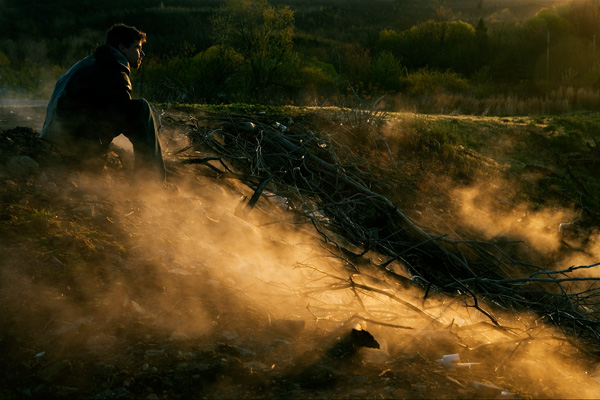
Eric at Dawn in Centralia

Eric at Dawn in Centralia

April 29, 2006

BTW, that's a different Eric, not me.

Make it happen

Yes, we made it happen.


Cornell Chronicle Online

From abolition to algebra, CU Library's unique holdings are available to readers online


A selection of rare and out-of-print historical materials at Cornell
University Library is only a click away for readers using a new
print-on-demand service.

The library partnered with BookSurge, a subsidiary of Amazon.com, in
June 2006 to make available some of its unique non-copyrighted holdings
-- collections ranging from historical mathematics and agriculture
texts to anti-slavery pamphlets.


anti-slavery pamphlets
Provided/Cornell University Library

Print-on-demand titles available from Cornell
University Library's exclusive collections include selections from the
Samuel J. May Anti-Slavery archive.

Wednesday, April 25, 2007

Q1 report out, Amzn stock hiked

I hate Wall street, but they finally did the right thing.


Amazon's Got It Going On


By Rick Aristotle Munarriz

April 25, 2007


Welcome to the "I told you so" era in the Amazon.com (Nasdaq: AMZN) timeline. Coming through with spectacular results for the quarter that ended in March, the leading online retailer laid to rest the notions that e-commerce of hard goods can't be profitable, that a retailer is tethered to holiday seasonality, and that a behemoth can't accelerate its top-line growth.

Net sales soared 32% higher for the period to top the $3 billion mark. Earnings per share more than doubled to $0.26 a share. Clueless analysts had been expecting the company to earn just $0.15 a share on $2.9 billion in net sales. Here's how things have stacked up recently for the company.


Quarter


Sales Growth (YOY)


Q1 2006


20%


Q2 2006


22%


Q3 2006


24%


Q4 2006


34%


Q1 2007


32%


Yes, there's a slight drop this time around. After accelerating sales sequentially throughout 2006, Amazon may feel mortal. However, 32% is far better than the 20% top-line spurt it recorded a year earlier. Even if you factor in currency-exchange gains, Amazon still smoked last year's showing.

Tuesday, April 24, 2007

word of the day

indomitable \in-DOM-ih-tuh-buhl\, adjective:

Incapable of being subdued or overcome; unconquerable.

patent meeting (round 2)

This time our company lawyer comes and records the whole meeting, when we talk about the things we have done. To be fair, this guy is pretty smart in being able to understand our description at all.
But for the fun of it, I'd like to capture his face when he heard the obscure algorithm we used to deal with the scanning borders.
His jaw dropped and he was totally blown away.


Monday, April 23, 2007

The Man Who Made Mapplethorpe


The Man Who Made Mapplethorpe


Published: April 24, 2007

Tall, handsome and rich would be one
way to describe Sam Wagstaff, a legendary figure in the international
art world of the 1970s and ’80s. Urbane is another. Iconoclastic,
certainly. And glamorous, without a doubt. But the word that keeps
cropping up in “Black White + Gray,” a new documentary about Mr.
Wagstaff by a first-time director, James Crump, that will be shown at
the Tribeca Film Festival next week, is “visionary.”


Skip to next paragraph


Francesco Scavullo Foundation


The collector Sam Wagstaff, left, and the photographer Robert Mapplethorpe in a 1974 portrait by Francesco Scavullo.


Mr. Wagstaff was one of the
first private art collectors to start buying photographs as early as
1973, long before there was a serious market for them. His photography
collection came to be regarded not only for its scholarship. It was
also original and unorthodox, and turned out to be extremely valuable.
Mr. Wagstaff sold it to the J. Paul Getty Museum
in 1984 for $5 million, a fortune at the time, establishing that
institution’s collection of photographs, now among the finest in the
world.

But the Wagstaff mystique deepens around his
relationship to Robert Mapplethorpe, his lover, to whom he was also
mentor and career impresario. Mr. Mapplethorpe, 25 years his junior,
was the bad boy photographer who scandalized the National Endowment for the Arts with his formal and highly aestheticized homoerotic photographs, which were given a retrospective at the Whitney Museum
of Art in 1988, securing his legacy. Still, obscenity charges were
brought against the Cincinnati Museum of Art when it mounted an
exhibition of Mr. Mapplethorpe’s work in 1990. Mr. Wagstaff himself
affectionately called him “my sly little pornographer.”

Mr.
Mapplethorpe, a young artist from a working-class neighborhood in
Queens, was making elaborate constructions with beaded jewelry when he
and the patrician Mr. Wagstaff, who had been a well-known curator at
the Wadsworth Atheneum Museum of Art in Hartford, met at a party in Manhattan in the early 1970s.

Throughout
the film, interviews with more than a dozen people who knew them both
provide an intimate and anecdotal picture of their lives, both
individually and together. In particular, Patti Smith, the poet and
rock star, offers tender descriptions of her friendship with both men.

Ms.
Smith’s friendship with Mr. Mapplethorpe began in 1967 when they were
both art students at Pratt Institute in Brooklyn. They were living
together near the Chelsea Hotel in the early 1970s when Mr.
Mapplethorpe first brought Mr. Wagstaff to meet her. “Sam came in and
seemed totally at home in my mess,” she recalls. “We liked each other
immediately. He had such a great sense of humor and had such a
nonpretentious and nonsanctimonious spiritual air.”

Dominick
Dunne met Mr. Wagstaff when they were both young men in New York, and
he talks about the dichotomy between Mr. Wagstaff’s life in the closet
in the 1950s and his more public profile later with Mr. Mapplethorpe.
“Sam Wagstaff was the New York deb’s delight,” he says in the film. “He
was probably one of the handsomest men I ever saw. Tall and slender and
aristocratic-looking. And he was funny. And he was nice. And the girls
went absolutely nuts over him.”

Gordon Baldwin, a curator at
the Getty Museum, recalls in the film that Mr. Wagstaff was proud of
his aristocratic background and says Mr. Wagstaff told him more than
once that his family had owned the farms where the Metropolitan Museum
is now, at the time of the Revolution. “It was pretty clear that he
came from a starchy background,” he said.

Still, Mr. Dunne
notes how oppressive the taboos about homosexuality were for Mr.
Wagstaff in the 1950s. Having had a privileged childhood on Central
Park South and attended Hotchkiss with classmates like Dean Witter, of
the brokerage firm, and Malcolm Baldrige, future secretary of commerce
under President Reagan, Mr. Wagstaff seemed destined to become part of New York society.

He
didn’t like talking about that period in his life, Ms. Smith remembers.
“He would say things with a painful tone in his voice about the
suppression and oppression of a homosexual man in the 1950s,” she said.
“I never asked him about it because it was the one area I could really
sense pain in him.”

Mr. Wagstaff certainly made up for lost
time. In the early 1970s, he “became an eager participant in the
excesses of the age,” says Joan Juliet Buck, the writer who narrates
the film with a lofty voice, reading adulatory, if not lapidary,
biographical prose that delivers the facts about Mr. Wagstaff’s life in
a tone aimed at, well, posterity. He was “always in rebellion against
his conservative and upper class background,” she notes.

“He
often held drug parties in his Bowery apartment,” Ms. Buck says at one
point, as if holding her nose at the very idea. “He used drugs for sex
and he liked the alternative perspectives they offered.”

Philippe
Garner, a director of Christie’s in London and a friend of both men,
says in the film: “My guess is that Robert gave Sam the courage to
explore areas of his personality, to savor a darker kind of lifestyle
than he would have done on his own. He unlocked a dark genie within
him.”

Despite Mr. Wagstaff’s sybaritic activities and his
relationship with Mr. Mapplethorpe, unconventional at the time, he
managed to amass a world-class photography collection and also to shape
the other man’s career. From the humble Polaroids Mr. Mapplethorpe was
making when they first met to his more provocative and refined
photographs, which now command $300,000 a print at auction, the
influence of Mr. Wagstaff’s taste and aesthetic sensibility on his work
is undeniable.

The film’s title, “Black White + Gray,” has
several meanings. Most, if not all, of the photographs in the Wagstaff
collection were black and white. Most of Mr. Mapplethorpe’s best-known
work is black and white too, and many of his nude subjects were
African-American.

But more specifically, the title refers to an
exhibition called “Black, White and Gray” organized by Mr. Wagstaff as
a curator at the Wadsworth Atheneum in the early 1960s. The show
included works by Barnett Newman, Ellsworth Kelly, Ad Reinhardt and Jasper Johns, among others.

The
show “sent shock waves through popular culture and heralded fashion’s
embrace of Minimalist aesthetics,” Ms. Buck says in her narration. At
the time Vogue magazine published an eight-page feature on James
Galanos’s couture, with Mr. Wagstaff’s exhibition as the backdrop.

“Back
in the 1960s, curators like Sam, Frank O’Hara and Henry Geldzahler were
much more like artists than a lot of curators on the scene are today,”
Raymond Foye, the publisher of Hanuman Books, an independent press,
says in the film.

“He had a very special antenna to find what
was new, what was good, what resonated with him,” says Clark Worswick,
a curator and photography scholar.

The film’s narration tends
to cast Mr. Wagstaff in nothing less than Olympian terms: “His
aesthetic underscores an unequal vision grounded in passion,
intelligence, sexuality and clever financial speculation,” Ms. Buck
recites as rare self-portraits by Mr. Wagstaff are shown. “He had few
rivals in his time. And none at all today.”

The intimate,
never-before-shown photographs of Mr. Wagstaff and Mr. Mapplethorpe
throughout “Black White + Gray” make great social anthropology, and the
interviews with Ms. Smith, Mr. Dunne and others give depth and warmth
to an otherwise stiff, if earnest, portrait.

Both Mr. Wagstaff and Mr. Mapplethorpe died of AIDS, Mr. Wagstaff in 1987 and Mr. Mapplethorpe in 1989.

One
snippet of footage shows a shy and endearing Ms. Smith reciting a short
poem of hers in an interview on the BBC in 1971: “New York is the thing
that seduced me. New York is the thing that formed me. New York is the
thing that deformed me. New York is the thing that perverted me. New
York is the thing that converted me. And New York is the thing that I
love too.”

Written before she met Mr. Wagstaff, this little gem nevertheless proves to be a fitting coda to the film — and to the man.

“Black
White + Gray” shows next Tuesday at the Pace Schimmel Center, 3 Spruce
Street, at Park Row, Lower Manhattan. Tickets and schedule:
tribecafilmfestival.org or (866) 941-3378.

Theremin

To learn more about this instrument, check out radioopensource's recent broadcasting here

Or the wiki link here.
 if(window.$WebSecurity){window.$WebSecurity.FlashDetection.HandleEmbedCode('026a5583-7d38-4428-83f0-a8e36aa8950d', '\x3cembed src\x3d\x22http\x3a\x2f\x2fwww.youtube.com\x2fv\x2fXwqLyeq9OJI\x22 type\x3d\x22application\x2fx-shockwave-flash\x22 wmode\x3d\x22transparent\x22 height\x3d\x22350\x22 width\x3d\x22425\x22 pluginspage\x3d\x22http\x3a\x2f\x2fwww.macromedia.com\x2fgo\x2fgetflashplayer\x22 allowscriptaccess\x3d\x22never\x22 allownetworking\x3d\x22internal\x22 \x2f\x3e');}else{if(window.flObj == null){window.flObj = new Object();}window.flObj['026a5583-7d38-4428-83f0-a8e36aa8950d']='\x3cembed src\x3d\x22http\x3a\x2f\x2fwww.youtube.com\x2fv\x2fXwqLyeq9OJI\x22 type\x3d\x22application\x2fx-shockwave-flash\x22 wmode\x3d\x22transparent\x22 height\x3d\x22350\x22 width\x3d\x22425\x22 pluginspage\x3d\x22http\x3a\x2f\x2fwww.macromedia.com\x2fgo\x2fgetflashplayer\x22 allowscriptaccess\x3d\x22never\x22 allownetworking\x3d\x22internal\x22 \x2f\x3e';}

Tuesday, April 17, 2007

Studio 360: The Great Gatsby


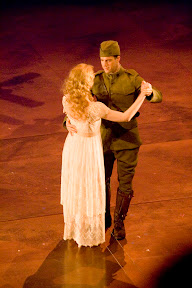
The Great Gatsby: The scene when Gatsby dancing with Daisy

Great Gatsby is my favorite novel. NPR's Studio360 recently ran a program discussing Fitzgerald and this novel. You can listen to that program at here

Gatsby is a dreamer that defies all the rules of the secular world in pursuit of his dream. He was killed when he was at the verge of realizing his dream. Although it's a tragedy, I believe he dies as a happy man.

Amazon podcast

As a huge podcast fan, I can't help telling people that Amazon has moved into this arena as well.
 http://www.amazon.com/podcast

amazon's book reader device

I hope I don't get into trouble by breaking this not so well kept secrete, given that I am not even in the group that works on this device. The hardware is developed by http://www.lab126.com/.
The software is developed by Topaz team. Josh said he wrote most of the code for file formating and rendering.

I pointed out that dynamic content makes more sense for such a book reading device. Josh was excited that this project could bring out-of-print books to the public. I don't quite buy that since print-on-demand can do the same at much lower cost.

Anyway it's nice to see amazon making a bold move into the arena of consumer devices. I can see a lot more opportunities from there.

Monday, April 16, 2007

I fule him

 if(window.$WebSecurity){window.$WebSecurity.FlashDetection.HandleEmbedCode('e714bc96-b8a3-4b9e-a4c5-804db1f772f9', '\x3cembed src\x3d\x22http\x3a\x2f\x2fwww.youtube.com\x2fv\x2fHXk1OXQYtb8\x22 type\x3d\x22application\x2fx-shockwave-flash\x22 wmode\x3d\x22transparent\x22 height\x3d\x22350\x22 width\x3d\x22425\x22 pluginspage\x3d\x22http\x3a\x2f\x2fwww.macromedia.com\x2fgo\x2fgetflashplayer\x22 allowscriptaccess\x3d\x22never\x22 allownetworking\x3d\x22internal\x22 \x2f\x3e');}else{if(window.flObj == null){window.flObj = new Object();}window.flObj['e714bc96-b8a3-4b9e-a4c5-804db1f772f9']='\x3cembed src\x3d\x22http\x3a\x2f\x2fwww.youtube.com\x2fv\x2fHXk1OXQYtb8\x22 type\x3d\x22application\x2fx-shockwave-flash\x22 wmode\x3d\x22transparent\x22 height\x3d\x22350\x22 width\x3d\x22425\x22 pluginspage\x3d\x22http\x3a\x2f\x2fwww.macromedia.com\x2fgo\x2fgetflashplayer\x22 allowscriptaccess\x3d\x22never\x22 allownetworking\x3d\x22internal\x22 \x2f\x3e';}

Sunday, April 15, 2007

Application of Virtual Realty in hiking

http://www.experiencewashington.com/v5/interactiveGallery/interactiveGallery.aspx
gives you a good sense of how does it feel to be there!

Learn to enjoy simple things in life

Don used to say he liked Christine because she knows how to enjoy simple things in life.
An example he quoted at the time was when he bought a water melon for Christine, she was totally joyful and  went out of her way to express her appreciation to Don.

This thought came across me when I was in the grocery store and saw some mango pudding. I used to be able to enjoy simple things like that. Not anymore. Even a flipstart wouldn't make me happy. I guess that's what people call "lost innocence".

Getting lost

As a general rule of thumb, things went wrong when you thought they are fine.
Today as I was almost done with the Mt. Si day hike, and leisurely strolling downhill with my attention fully on the podcast of "Studio 360", I got lost.
 
Thinking an open area a bit uphill was the trail, I braved through the dense bushes to make a shortcut, only to find that the small open  area was leading to nowhere. That only make it worse.  For a split second, I was a bit worried, although I could still heard the birds singing in the wood and can even see towns down hill, there is not a clear way out except for dense bushes.

Anyway, I eventually found my way back when I paused my ipod and caught people's voice, and started going to that direction. About 20 minutes later, I was strolling down the stores in North Bend mall and wondered, what if I didn't find my way back?

Saturday, April 14, 2007

Price you have to pay to be a minority

作一个不愿意从众的人,代价就是无论走到哪里,都会发现自己是少数派。


不愿意从众,因为不认同大众的价值观: 消费主义, 无处不在的虚荣,攀比与炫耀。 就像一群实验室里的猴子,不知道它们争抢的头破血流的香蕉,只是试验人员放在那里诱饵。

个体的价值,体现在独立选择与决定的权利,然而massive marketing, branding, 从实质上剥夺了这种权利。人的自由意志被蔑视,以一种psycho-marketing research的方式。
你的所有兴趣爱好取向,都是电视里面那个人告诉你的。而他/她说的,又是掌握了绝大多数社会资源的人所指示和授意的。

生活在这样的人群里,我只能庆幸,自己是少数派。

说这些,无意说服任何人,因为少数派, by definition, will not be majority.
如果有一天成了majority, 只不过是下一轮更sophisticated marketing campaign的target.

House on fire? Lock yourself out

My project has reached a house-on-fire situation, and I have been working over-time to put out the fire.
Unfortunately I just accidentally locked myself out of the office (with all my computers in there).
Can't get in until Monday.

That's probably God's sign to me: go take a break! and come back later.

A Word of Advice During a Housing Slump: Rent


A Word of Advice During a Housing Slump: Rent


Barbara P. Fernandez for The New York Times


Homeownership may be the American dream, but the real estate downturn
is calling into question the view that it is a can’t-miss investment.

A promotional spot for the National Association of Realtors
came on the radio the other day. The spot, introduced as something
called “Newsmakers,” was supposed to sound like a news report, with the
association’s president offering real estate advice.“This is the best time to
buy,” Pat Vredevoogd Combs, the president, said cheerfully. “There’s a
lot of inventory in the marketplace. Interest rates are low. It’s a
wonderful tax deduction.”

By the Realtors’ way of thinking, it’s
always a good time to buy. Homeownership, they argue, is a way to
achieve the American dream, save on taxes and earn a solid investment
return all at the same time.

That’s how it has worked out for
much of the last 15 years. But in a stark reversal, it’s now clear that
people who chose renting over buying in the last two years made the
right move. In much of the country, including large parts of the
Northeast, California, Florida
and the Southwest, recent home buyers have faced higher monthly costs
than renters and have lost money on their investment in the meantime.
It’s almost as if they have thrown money away, an insult once reserved
for renters.

Most striking, perhaps, is the fact that prices may
not yet have fallen far enough for buying to look better than renting
today, except for people who plan to stay in a home for many years.

With
the spring moving season under way, The New York Times has done an
analysis of buying vs. renting in every major metropolitan area. The
analysis includes data on housing costs and looks at different
possibilities for the path of home prices in coming years.

It
found that even though rents have recently jumped, the costs that come
with buying a home — mortgage payments, property taxes, fees to real
estate agents — remain a lot higher than the costs of renting. So
buyers in many places are basically betting that home prices will rise
smartly in the near future.

Over the next five years, which is
about the average amount of time recent buyers have remained in their
homes, prices in the Los Angeles area would have to rise more than 5
percent a year for a typical buyer there to do better than a renter.
The same is true in Phoenix, Las Vegas, the New York region, Northern
California and South Florida. In the Boston and Washington areas, the
break-even point is about 4 percent.

“House prices have to fall more before housing becomes a clear buy again,” says Mark Zandi, chief economist of Moody’s Economy.com,
a research company that helped conduct the analysis. “These markets
aren’t as overvalued as they were a year ago or two years ago, but
they’re still unfriendly. And that’s one of the reasons the market is
still soft — people realize it’s not a bargain.”

There is
obviously no way to know what home prices will do in the next few
years. But there are two big reasons to doubt the real estate boosters
who insist that it’s once again a great time to buy.

The first
is history. After the last big run-up in house prices, in the 1980s, a
long slump followed. In the New York area, prices peaked in early 1989
and then fell 9 percent over the next three years, according to
government data. (Adjusted for inflation, the drop was much bigger.)
Not until 1998 did prices pass their earlier peak.

Keep in
mind that the 2000-5 boom was even bigger than the ’80s boom and that
house prices on the coasts, according to the official numbers at least,
have fallen only slightly so far. So it is hard to imagine that prices
will rise 5 percent a year, or another 28 percent in all, over the next
five years.

The second reason for skepticism is that buying has
never been quite as beneficial as Realtors — and mortgage brokers, home
builders and everybody else who makes money off home purchases — have
made it out to be. Buyers have to pay property taxes on top of their
mortgage, while renters have the taxes included in their monthly rent
bill. Buyers also face thousands of dollars in closing costs (and, in Manhattan,
co-op charges). Renters, meanwhile, can invest what they would have
spent on closing costs and a down payment in the stock market, which
hasn’t exactly delivered a bad return over the last 20 years.


And that famous mortgage-interest tax deduction? Yes, it reduces the
borrowing costs that come with a mortgage, but it doesn’t eliminate
them. Renters don’t face any such borrowing costs.

Almost two
years ago, I interviewed a thoughtful 37-year-old man named Tchaka
Owen, who happens to be a real estate agent. (Whatever the sins of the
Realtors’ association, there are a lot of smart, helpful agents out
there. Just remember that they have a financial interest in getting you
to buy a house.)

Mr. Owen and his girlfriend, Polly Thompson,
had recently moved from the Washington suburbs to the Miami area and
decided to rent a two-bedroom apartment with spectacular bay views.
“You can get so much more for your money, renting instead of buying,”
he said at the time.

Sure enough, house prices soon began to
fall in South Florida, and Mr. Owen and Ms. Thompson started to think
about buying a place. A three-bedroom Mediterranean-style house that
they liked was originally listed for $620,000 last year, but the price
was later cut to $543,000. They bought it in June for $516,000. Since
then, the market has fallen further, but Mr. Owen said he didn’t mind,
because they plan to stay in the house at least a decade. “We love it,”
he told me.

Clearly, there are benefits to owning a house beyond
the financial, like the comfort of knowing you can stay as long as you
want or can fix the roof without permission. But real estate has been
sold as more than a good way to spend money. It has been sold as a
can’t-miss investment. Back in 2005, near the peak of the market, the
chief economist of the Realtors’ association, David Lereah, published a
book called “Are You Missing the Real Estate Boom?” The can’t-miss
argument was wrong then, and it may still be wrong today.

After
hearing that radio spot, I called Ms. Combs and asked her whether she
thought there was any chance that she and her fellow Realtors had gone
a bit too far in promoting the boom. “I absolutely disagree,” she said,
still cheerful. “We help people look at the marketplace.”

So I
asked what advice she gave her own clients in Grand Rapids, Mich.,
where she is an agent. “We often tell people that they need to stay in
a house five to six years for it to make sense,” she said.


That’s a nuance that didn’t make it into her “Newsmakers” interview. In
Grand Rapids, where the median home costs $130,000, it is probably good
advice. In a lot of other places, it may still be too optimistic.

think of everyday experience as new experience

This may sound like a cliche, but occasionally reflect on what I am doing daily does give me a new perspective towards things that I took for granted.
The idea of playing putting on a downtown high-rise window office. Is that exactly what I was dreaming of when I looked at T-Cube in Izumi Garden?

At this moment, I started wishing I was back in that gaint elevator (they call it "shuttle"). Miss those days in Tokyo, even the rainy days. Because they all seemed so surreal, from a distance.

加班歌

Swimming my way upwards in the sea of code, I start enjoying the office by my own.
More precisely, the whole building by my own. I can boost the volume of the Xu Wei's songs:
"
        那一年你正年轻
  总觉得明天肯定会很美
  那理想世界就象一道光芒
  在你心里闪耀着
  怎能就让这不停燃烧的心
  就这样耗尽消失在平庸里
  你决定上路就离开这城市
  离开你深爱多年的姑娘
  这么多年你还在不停奔跑
  眼看着明天依然虚无缥缈
  在生存面前那纯洁的理想
  原来是那么脆弱不堪
  你站在这繁华的街上
  找不到你该去的方向
  你站在这繁华的街上
  感觉到从来没有的慌张........
  你站在这繁华的街上
  找不到你该去的方向
  你站在这繁华的街上
  感觉到从来没有的慌张........
  你曾拥有一些英雄的梦想
  好象黑夜里面温暖的灯光
  怎能没有了希望的力量
  只能够挺胸勇往直前
  你走在这繁华的街上
  在寻找你该去的方向
  你走在这繁华的街上
  再寻找你曾拥有的力量
"

Friday, April 13, 2007

Food for thoughts I came up today


Finally I can feel my impact on my company's product line. Unfortunately, it's largely negative.  Have issues, will debug :-(

How to debug? Be a good swimmer in your own code.

Between my bugs and me, I had the following thoughts to comfort myself.


Technology changes too fast. What persists is the understanding of the fundamental problem and management skills

After such flamboyant thoughts, I came back to my desk and found my bugs are still out there somewhere. "Da*n it"

Thursday, April 12, 2007

MVC

When I think about it, almost every software project can be captured by the following summary.


User A -> Input, Process, Data Output -> User B


where Input/Output is Human Computer Interface, and Processing can be local (transform the data) or remote (transmit the data)


When User A <> User B, it becomes Human-Human communication. When this communication grows larger, it becomes a community (e.g. web 2.0)


What's the more juicy part of this system? Meaning where we can expect abruptive innovations?

I think it's the "Output -> User B" part, that is, "data visualization".


My earlier career has been concentrating on User "A -> Input" part of the game. Then I devoted a lot of time working on "processing". After all this, I realize it's the "visualization" that dictates the former two parts.


偶然看到这本很多年前度过的书,推荐一把

What I read was a Chinere edition back. And it was in the college years.


A tale of two professors., August 31, 2003


Reviewer:
displacedhuman "displacedhuman" (a swiftly tilting planet) - See all my reviews
(TOP 50 REVIEWER)   
As part of an exchange programme, Britain's Rummidge University swops literature professors each year with Euphoria State in California. Humble Rummidge University--set in the darkest heart of the Midlands sends lowly Phillip Swallow to glorious, golden California, and Euphoria State sends Morris Zapp to England. Both professors leave their wives and families behind--Swallow is chomping at the bit for the freedom that beckons, and Zapp is hoping that his second wife won't go through with a threatened divorce.

Zapp and Swallow are opposites, but they are both unpleasant and unappealing in different ways. Swallow loves literature--in all its forms, but his "undiscriminating enthusiasm" has resulted in an inability to settle on a period or a writer. He is, however, considered an expert in the drafting of examination questions, and he seriously considers compiling a book of his "best-ever" questions. In Swallow's mind, this book of questions is destined to become a significant work of philosophy. Zapp, the Californian, is a Jane Austen scholar (his children are named Elizabeth and Darcy), and he suffers from recurring nightmares in which placard-carrying students demonstrate against studying Jane Austen. Unlike Swallow, Zapp doesn't believe in the power of questions and declares that it is the "answers that separated the men from the boys." While Zapp possessed stunning credentials years ago, the truth is that he hasn't published anything in years. His last attempted project was to produce a mammoth work on Jane Austen in the hope that this will put "a definitive stop to the production of any further garbage on the subject." But Zapp is mired down in "Sense and Sensibility," and with his wife threatening to divorce him, Zapp accepts the trip to England to buy some time.

Swallow takes to the California lifestyle with gusto. He begins dressing more casually, and within days he's visiting strip clubs and joining in enthusiastically with the student activists on campus. In one hilarious episode, Swallow attends a departmental function, and asks that everyone play a game of "Humiliation." The object of the game is to prove that you are the least well-read person in the room. As we all know, this game is the antithesis of the typical English major's behaviour. The dilemma for the players is whether or not to reveal their superior knowledge and lose, or win by exposing and promoting their ignorance in a room full of PhDs.

Zapp finds lodging with an eccentric Irish doctor who can't stop salivating over his new lodger's television. At Euphoria State, Zapp is used to being the darling of the English Department, and it takes him some time to adjust to the new social conventions at Rummidge. While trying to adjust to the English climate, Zapp also undergoes a moral transformation and actually commits an unselfish act or two. Rather uncannily, Zapp and Swallow both become embroiled in some startlingly similar situations, and it soon becomes apparent that the professors did more than just exchange jobs!

About halfway through the novel, the author switches to the epistolary form. This later changes to various reprints of newspaper articles. Then it's back to standard novel form before the ending, and the ending is written in the form of a play or script. The novel is amusing from beginning to end--although I do have to say that the ending was a bit of a disappointment. I am still awarding 5 stars to the novel, however, as it really gave me a lot of laughs and a great deal to think about. If you enjoy novels with an academic setting, then you will enjoy "Changing Places"

Wednesday, April 11, 2007

what will happen when we run out of fuel

Alternative Radio tonight just aired a talk by Bill McKibben, whose latest book "Deep Economy" talks about people's blind zeal towards growth and its consequences on the environment, such as global warming.

According to Bill, it would triple the world's demand on fuel if Chinese were to reach the level of car ownership as the American currently have. Since the world's fuel supply wouldn't possibly triple (it can barely keeps at its current level) in the foreseeable future, Chinese have to go through another route for developing.
Since those projections are based on widely known statistics, the Chinese leaders must have been aware of it long time ago. That been said, why they still promoting the growth path of developing private cars is beyond my understanding. 

Anyway, it's predicted that we will run out of fuel by 2030 or even sooner. Although we could die from global warming before 2030, I still can't help speculate how people would react to this prediction.
It reminds me of the movie 《Japan Sinks》. Only this time, there is no smart decisive solution that could turn things around, like that in the movie.

I think people will become more greedy knowing that the days of abundant energy will end. Instead of seeking alternatives, those in power will mobilize the majority into wars to seize the last drop of oil. The world will become a living hell like that depicted in the movie 《child of men》.

alternative

NPR has a program called Alternative Radio, which features many liberal speakers. Today I came across this website about poetry http://www.milkmag.org/poetry.htm

Gazing at the collage, the first word that comes to my mind is "alternative".
In Chinese, it maybe translated to 另类。

When the mainstream corrupts into propaganda, brainwashing and consumerism, through sophisticated censorship (both in US and China), the only way for an individual to keep his/her freedom of thinking is TO search for the ALTERNATIVE.

I am glad I have found two.


Tuesday, April 10, 2007

《H2O 前世今生》eric 原创

(1)

结束了云上的日子,雨滴徐徐的降落。与众多伙伴一起在空中飞舞,他想,Sky diving未尝不是一种有趣的体验,甚至还有几分兴奋。但是等待他的,未知的地面,又是怎样的?

他落在摩天大厦的玻璃窗上,看着办公室里忙碌的女孩。梳着马尾辫,穿着黑色的套装。透过冰冷的窗,他试图想象里面的气息,淡淡的薰衣草的气息。雨滴继续向下,依依不舍的顺着玻璃窗垂直的平面下滑。

倏的,女孩走近窗边,努力向外张望。这一刻,雨滴仿佛可以触到她芬芳的发稍。但是她的眼神并非为它停留。令这美丽女孩失神张望,苦苦等待的,又会是谁?

雨滴纵然奋力,也无力在光滑的平面上支撑自己的重量。他只能眼看的自己坠落,女孩红润的脸颊,紧贴着玻璃,那一刻,他仿佛感到一丝温暖,让他回想起云上温暖的阳光照在他身上的时候,他刚刚出生的时候,这是自然母亲的温暖。可是只是短短的四分之一秒,他重又回到冰冷的世界,继续下落,因为只有下落,才是雨滴的宿命。

在他从排水管的出口一越而跳到地面的时候,他第一次看到街上行走的人,拥挤的车辆。他想:" 那个女孩等待的人,是否就在这里? " 这样想着,他已经被冲进了黑暗的地下。这就是雨滴的短暂的一生?

这一生他注定和所有人擦肩而过,这样想着,他在黑暗中等待死亡。死亡却姗姗来迟,最先到来的,是漫长的黑暗。在黑暗里,他进入梦乡,在梦境里,他看到自己的前世。

雨滴的前世是水手思念的泪,从甲板上飘落到一望无际的海面后,他开始了自己的航行,随着温暖的季风,他感到自己航行的越来越快,越来越轻,最后飞腾而起,变得和空气一样透明。

他看不到,也感觉不到自己。没有痛苦,也不再有知觉。雨滴相信,那就是他去到云上之前的无忧无虑的日子。不用被玻璃窗里,可望而不可及的女孩困扰,没有了沉重的肉身,这也是他要去的方向。他等待着那个一个光明的出口,让他回到宁静的海面。从云端到彼岸。追随前世的梦。


(2)

一切并未如水滴梦中那样发生,他没有回到大海,而是顺着锈迹斑斑的管道,进入了一家水处理厂的大铁罐里,然后从一个发黄的玻璃管钻了出来,被一股巨大的压力,推入了一个透明的玻璃瓶。水滴还没来得及呼吸一口外面的空气,瓶口就被压上了一枚锡皮盖。瓶子飞快的旋转着,他也不得不随着瓶子旋转,不由得感到天旋地转。直到瓶子外面贴上了标签,才算消停下来,他挣扎着向上游,要看一看久违了的外面世界。

他看到的是一群一模一样的玻璃瓶,上面贴着一样的标签" Aso"。从小到大,他从未象此刻这样绝望,令人窒息的绝望。他不愿意和别人一样,不愿意被贴上标签,不愿意成为可以替代的货物。他宁愿做草地上的一滴露珠,宁愿做山涧的一滴清泉,也不要这样被关在一个狭窄的瓶子里,看一个变形的世界。

此时他想到了死,一颗水滴,如果失去了灵魂,就会自动肢解,变成无生命的分子,失去了自我,更不要提重新组合与行动的能力。把所有这些水分子凝聚在一起的,是这颗水滴的一个信念,相信自己是独特的,不可替代的。是这个信念本身,赋予他生命。在这个瓶子里,只有他还活着,也许是侥幸,也许是因为他心里有着一个经过多次蒸馏,过滤也不能磨灭的记忆,关于那个玻璃窗后的女孩的记忆。

这个记忆让他不甘心就这样死去,让他紧紧的保护好组成自己的每一个分子。虽然瓶中一千多帕斯卡的压强让他越来越难以分辨哪个水分子是自己的,哪个是将要穿透他的心脏的无生命子弹。


(3)

就在水滴苦苦挣扎的时候,一个温柔的声音在他耳畔响起," 往上游,游到水面来,我可以帮你分担一些。"
水滴抬起头,透过层层的暗流,他看到一个半球形的气泡正漂在水面上。他于是奋力的向上,拖拽着他所能够保持住的所有水分子。终于到了水面,他贴住气泡的正下方,长长的喘了一口气,现在他已经轻松了许多,至少只有一面受敌。他仰起头,问气泡," 是你在对我说话? "

水滴听说过,每个水滴来到这个世界,都是为了寻找属于他的那个气泡,如果找到了,他们相遇结合,就可以互相扶持,在最恶劣的环境下存活下来。当水滴快要被肢解时,气泡可以抱住他,帮她抵御外敌,当气泡将要破裂时,水滴则可以及时用自己身体的一部分堵住薄弱的纪要裂口的地方,使她修复如新。

但是我们这颗水滴很害羞,还从来没有和勇气任何一个气泡说话,更不用说靠得这么近说话了。

气泡到是一点不拘紧," 当然是我啦,难道这里这里还有别的气泡吗? "
一边环视四周。是的,她也是气泡中唯一的幸存者。但是她没有为自己的命运担心,因为从空中被抽进这个瓶子里之前,她已经对生死看得很开了。无论多么长的一生,最终的结局,都是成为一丝泡影。所以重要的只是紧紧抓住现在,当下。

这个散发着美丽光泽的气泡,也曾经碰到过不少追求她的水滴,但是她觉得自己还没有准备好。今天她和这颗水滴成了瓶中仅存的一对,难道真的是上天的安排?她偷眼看了身子底下奋力抱成一团的水滴。恩,这家伙还挺壮实的,说不定,他就是我命中那颗水滴?气泡这样想着,问,"你从哪里来? "

"我出生在爱琴海东北部的萨罗斯湾, 一个希腊水手思念的眼泪落到了海里,赋予我生命。 "

气泡心中一动," 那后来呢?你自然升华过? "

"后来我顺着洋流飘到直布罗陀海峡,在那里升华。 "

"你真的变成云?去了哪里? "

"我所在的云,飘到了冈底斯山间。 "

"你有没有看到圣湖玛旁雍错? "

"当然看到了,我看到朝圣者围着湖转经,在湖边清洗他们的灵魂。 "

气泡在也抑制不住心中的激动,迫不及待的说," 我就是在圣湖边出生的,是一位高僧亲手捧起湖水,给了我第一层水膜。"

水滴不敢相信,自己的眼前竟然是一位与他有过一面之缘的故人," 你真的来自圣湖?"

"是啊,多么怀念在圣湖的日子呀!那里的空气那么轻,仿佛一跳就可以飘到空中。 "

如果说是眼前的尴尬让他们相逢,那么就是少年时代的共同记忆让他们相爱。他们不约而同的发现,对方就是自己一直在寻找的那个人。两个人就在这阴暗的包装箱里的一个闭塞的瓶中,一起回忆那无际的天空,碧蓝的湖面和雪白的山峰。不知不觉地,两人紧紧地拥抱在一起,成了一体......


水滴和气泡,组成了一个完整的水泡。无论什么波澜也不能将他们拆散。

但是且慢。

让我们设想一下,世界上有多少痴男怨女还在苦苦寻找他们的另一半。他们可能属于不同的瓶子, 或许永远也不能见到对方。我一直相信,第三章中那种完美的相遇,完美的爱情只存在于虚幻的小说戏剧中。在现实中,there are always
other bubbles, and other water drops in the bottle. 他们个个都有自己的梦想,世界上哪有那么多美丽的结局?


(4)

这个承载着完美爱情的瓶子,与其他23个看起来一模一样的瓶子一起被装进塑料箱;这个承载着完美爱情的塑料箱又与其他499个看起来一模一样的塑料箱一起乘着JR电车从池袋到品川,最后来到横滨港,被叉车运进了一个集装箱里。这个承载着完美爱情的集装箱,与其他1199个看起来一模一样的集装箱一起,被巨大的机械臂吊到了远洋货轮的甲板上。这艘承载着完美爱情的远洋货轮从横滨港出发,跨越太平洋,来到了旧金山。


在旧金山的城市之光书店里,一位作者正在朗读他刚刚出版的诗集中的一首《Song》:

The weight of the world
is love.

Under the burden
of solitude,
under the burden
of dissatisfaction
the weight,
the weight we carry
is love.
......

No rest
without love,
no sleep
without dreams
of love--

......

yes, yes,
that's what
I wanted,
I always wanted,
to return
to the body
where I was born.

书店昏暗的灯光里聚集着一群和他一样热爱诗歌,热爱生活的人。在诗人的最后一个元音被四壁的几万本书反射,吸收之后许久,空气中只有喘息的声音,每个人都被这种沉静所打动,直到有一个女孩如梦方醒,带头开始鼓掌,大家才回到现实。全体起立,对诗人的朗诵抱以最热烈和诚挚的赞美。

此刻,带头鼓掌的女孩有一头乌黑的卷发,褐色的眼睛放出爱与希望的光。她从手袋里拿出一瓶水,没错,就是承载着水滴和气泡完美爱情的那瓶!她苗条的身段在人群中穿梭自如,很快就来到了诗人面前。女孩用双手把瓶子递给诗人,
"你今天的朗诵太棒了。我能用这瓶水换得你的签名吗? " 诗人微笑着抬起头," 那我真是太荣幸了" ,说着他接过瓶子。

(完)

JSTOR

Yet another book scanning project.
http://www.jstor.org/about/images.html

John Burns, a former HP veteran, head of Topaz is moving to JSTOR. It seems digital is going through some re-org.


Monday, April 9, 2007

a short story by andrei codrescu

The Written Life


By

Andrei Codrescu


Lois Fernandez, a Spanish author, had five biographies written about
her life. She trained her first biographer when she was still in
college in Seville. After her first book of autobiographical poetry was
published and won prestigious prizes, she drowned in Catalonia, leaving
behind an intriguing suicide note.


One of her classmates, an unpublished poet, leapt at the chance of
writing her life, both because there hadn't been much of it and because
he had known her personally over four years of it. He had always wanted
to sleep with her because in addition to being talented, Lois was a
sultry Mediterranean beauty with hazel eyes and a figure that incited
the deepest ayes a Spaniard is capable of. In his biography, the
author, Carlos Maria Seguin, subtly repaired the grievous mistake of
having never succeeded in sleeping with Lois, by insinuating that he
had. The passage in question is an inspired example of the shoddiness
of the biographical craft. Carlos recalls a drunken evening after a
literary club meeting, an evening replete with names of people and
places, weather data, and precise descriptions of what everyone was
wearing. The merry gang of young writers roams through several bars
before ending in the rooms of a wealthy student whose apartment is
being looked after in his absence by Carlos Maria. The revelers drop
away one by one, either by stumbling drunkenly out, or passing out on
the hand-woven Moroccan rugs. At long last, the two poets are left with
one another, leaning drunkenly against each others' backs in front of
the dying embers in the Cordoba-style fireplace, and the famous
sentence occurs: "Still reciting remembered snatches of each others'
verse, they recognized simultaneously, the presence of Desire, standing
mute in a corner of the room, between two ogival windows." The scene
ends there, but one can easily imagine (in fact, one is compelled to)
the helplessness of the young bodies under the unflinching gaze of that
mute witness.


Carlos Maria Seguin received a fair share of attention for his
quasi-intimate portrait of Lois Fernandez, and his book sold many more
copies than Lois' prize-winning but slim volume of verse. The trouble
was that Lois came back to life, resurfacing in Cadaques, as if born
from the foam of the sea, and mocked the young biographer, claiming,
among other things, that all the paper trails she had left purposefully
behind, were fabricated for the express purpose of snaring a
biographer. Even her poetry had been written with that goal in mind.
Furthermore, Lois was really Luis, a 28-year-old man, not a sultry
female beauty.


Carlos Maria Seguin should have drowned himself in the sea, but instead
he took a humble job teaching in the provinces, and was never heard
from again. Luis Fernandez, now in charge of his own life, went on to
write a volume of stories that didn't win any prizes. The critical
establishment did not find the game amusing, consisting mostly of
biographers or biographers in the making, or writers who wrote with a
view toward eventual biographies.


Fernandez committed "suicide" one more time, and snared yet another
biographer. When he resurfaced again, this time as an Arab woman named
Fatima Lois, she declared famously that snaring a biographer was like
shooting fish in a barrel, the Arabic equivalent of which is, "catching
sand flies with a camel."


During the course of 80 productive years of writing increasingly
obscure literary works, Fernandez (he or she always kept that name),
committed "suicide" six more times, leaving behind longer and longer
suicide notes that became, in the end, his or her best-remembered work.
At least this is now the critical consensus reported in the last of his
or her biographies by a scholar who had the body exhumed and subjected
to DNA analysis, just like a criminal cold case. This last biography
sold more than all of Fernandez's books, is in its eighth printing in
Spain, has been translated into several languages and has garnered
important prizes. The author, Pistil (one name, like a rock star) is a
familiar voice and face on Spanish radio and TV. In 2005, Pistil
received the prestigious Helix Prize, and is the first biographer to be
nominated for a Nobel in literature.

Sunday, April 8, 2007

what Kaifu Lee's talk makes me think

First I had this impulse to move to Google China; just like 10 years ago, when I first heard his talk in Tsinghua, I felt propelled to go work for MSRCN.

Then I think, what shall I do there after moving to Google China. A number of things comes to my mind. Some are quite viable. Then I felt there are so many things I have not done in US. Before going back to China, I wanna do those things first, like getting a MBA, going to Yellowstone NP.


Then I thought, do I really like to work in China? Maybe just moving to Google Kirkland is better, where I can sort of get the best part of both worlds, enjoy frequent trips to China, while still have US style freedom to talk.


Then my thoughts went really wild: if I ever gonna move, why China? why Google? I have many more choices than that. I could work for UNICEF in Europe, or find a postDoc job in Australian, or go to HP Brazil. The world is wide open to me. And there are so many opportunities.


From this moment on, I feel totally alive again. Just like 10 years ago. Only this time, I have less fear and more confidence.

Thanks Kaifu! The unintended effect of your talk makes me feel like a totally new person again.

kaifu lee talk

Having been to both, I found the R&D remarks about Xerox PARC and MSR very interesting.

 if(window.$WebSecurity){window.$WebSecurity.FlashDetection.HandleEmbedCode('1af6611a-57a6-4ae0-b5ed-5651264817bd', '\x3cembed src\x3d\x22http\x3a\x2f\x2fwww.youtube.com\x2fv\x2feAwlDeB5ZIQ\x22 type\x3d\x22application\x2fx-shockwave-flash\x22 wmode\x3d\x22transparent\x22 width\x3d\x22425\x22 height\x3d\x22350\x22 pluginspage\x3d\x22http\x3a\x2f\x2fwww.macromedia.com\x2fgo\x2fgetflashplayer\x22 allowscriptaccess\x3d\x22never\x22 allownetworking\x3d\x22internal\x22 \x2f\x3e');}else{if(window.flObj == null){window.flObj = new Object();}window.flObj['1af6611a-57a6-4ae0-b5ed-5651264817bd']='\x3cembed src\x3d\x22http\x3a\x2f\x2fwww.youtube.com\x2fv\x2feAwlDeB5ZIQ\x22 type\x3d\x22application\x2fx-shockwave-flash\x22 wmode\x3d\x22transparent\x22 width\x3d\x22425\x22 height\x3d\x22350\x22 pluginspage\x3d\x22http\x3a\x2f\x2fwww.macromedia.com\x2fgo\x2fgetflashplayer\x22 allowscriptaccess\x3d\x22never\x22 allownetworking\x3d\x22internal\x22 \x2f\x3e';}

what's the 'K' in KUOW?

I am a huge fun of radio, but I have always wondered about where does the name of each radio station comes from. What does the starting letter 'K' stands for.

So I finally broke down and looked it up. According to this wiki entry, the rules for the radio station names ( or "calling signs" as they call it) goes:

In the United States, broadcast stations have call signs between three and six characters in length, though the minimum length for new stations is four letters. An additional suffix may also be added, indicating a specific broadcast service type. Full-power stations receive four-letter call signs, while broadcast translator stations usually receive call signs with five or six characters, including two or three numbers. Generally, call signs begin with "K" west of the Mississippi River, and "W" to the east.

Friday, April 6, 2007

before bed

Really need to go to bed now.

But  i always hate going to bed,

as if there was something interesting hiding there

and it would jumpout after I fell asleep,

as if I would miss that interesting thing.

Working on wall street is not all that bad

NYSE is closed today (technically yesterday) in observing of the "Good Easter Friday"

And they are still earning "a lot a lot"

Why do I enjoy hacking

why do I enjoy hacking?
Because while doing it, I have the illusion that everything is under control and things will eventually work out.

Tuesday, April 3, 2007

Just when i was about to lose it

I was really testy this morning because of various issues.
Then I walked out for lunch and listening to "This American Life" on podcast. The episode I happened to stumble to was "Kid Logic"
One excerpt goes:"

A little girl gets on the plane, tightens her seat belt and waited until the plane took off. She turned around and asked the Lady sitting beside her, "when are we going to become small?"

Yeah, that's kid's logic: very reasonable according to their observation, but happens to be wrong.

"

You can get a full hour of such fun stories from here. Click on the yellow sign  " Full Episode" The one on the linked page, not this one, kid.

Sunday, April 1, 2007

一边看日本电影《故乡》,一边想到的


片子的情节相对简单,石崎精一 和 石崎民子 夫妇世代生活在一个海岛,一直以驾驶自家的木船运石填海为职业,为此男的贷款造船,女的考了工程师执照,但是十二年后,机械化的驳船代替了他们的木船,他们的为了生计要离开祖辈居住的小岛,去城里的工厂工作。
虽然片子的背景是70年代的日本小岛,但是有时候一个短暂的镜头,或者一段对白,就能让人想到很多。也许这就是经典片值得咀嚼的地方吧。以下是我想到的:

1) 是关于背井离乡。
那时候的日本人还是很看重故土之情的, 他们如果不是迫不得已,是不会离开故乡的。 反观自己, 我离开武汉,而后离开中国,似乎是再自然不过的事。从来也没有任何犹豫。思念故乡变成一种奢侈,对于一个没有故乡的人。
I think that's why Kurt Vonnegut's recent book "A man without a country" echoes with me.

2)是关于职业选择。
从自己开船,到做工人,他们比较的不只是收入(做工人收入高),还有一种尊严。自己开船更多的是为了尊严。

3) 是关于家庭。

人在这个世界上只有两种状态:要么是一个人,要么是两个人。

一个人比较孤单,生病了,老了,没有人照顾,会很可怜。但是好处是比较自由。一个人吃饱了全家不饿,比较适合流动性强的职业。两个人可以互相扶持,但是也需要互相迁就。有时候一方要能体谅宽容另一方,有时候一方要做出牺牲,才能保持两个人是整体。相处是一辈子的事,花前月下都只是培养最初的感情,真正维系双方关系的,是共同的价值观和双方的宽容理解。

在70年的日本,家庭还是以男性为中心的。民子的职业选择和生活,都是围绕着丈夫,丈夫去面试,她就在工厂门口等着,虽然她自己也考到工程师执照。


4)是关于机械化与人性

每次木船往海里倒石料的时候,整艘船都要倾斜到70度角,对夫妻俩人都是一次生死攸关的挑战。相比之下,机械船只要用机械臂就可以轻松的完成了。毫无疑问,后者更为有效。但是在木船上工作,一家人可以在一起,虽然辛苦,但是两个人的感情更加牢固了。

木船最终难逃被烧掉的命运。Call me sentimental if you want. But change is not in the nature of human kind. It's only recently that change has become the only constant. 没有什么东西是永恒不变的。这也许就是现代化的代价吧。


说说我比较喜欢的镜头运用吧。民子在田里干活的那一段,用特写镜头跟拍民子锄地的动作,与之穿插的,是民子的小女儿在一旁玩耍的一个静止镜头。

另一个镜头:
石崎一家搬家的时候, 是坐船走,有很多人在港口送行。每个人都用一条纸带,一头握在自己手中,一头给要离去的人。然后船开了,纸带就被拉断了, 随风飘舞。

感慨一句:一部电影里面就有这么多道理,人生的课程真的有很多要学的。

[Reference] http://www.imdb.com/title/tt0070187/

山田洋次的好多电影都曾被介绍到中国

远山的呼唤 (1980)
寅次郎的故事 (1969-1995)
砂器 (1974)
幸福的黄手绢 (1971)


可惜那时候太小,只在相声里面听到引用,都没真正看过。


today's hiking at Tiger Mt.


Started from Issaquah High School. The High School Trail head is at a small parting lot about 100 meters east of the Issaquah High School (400 feet elevation).

On the way back I found that there is small gate at the back of the Issaquah High School soccer stadium that also leads to High School Trail.

After 1 mile on high school trail, near the power line. there is a junction to get on Section Line Trail.

It's a very steep trail, goes all the way to West Tiger 3 Summit.
About Half way on this trail, there is junction with West Tiger Mt. railroad grade Trail. I think you can turn left there to go to West Tiger 3 Trail. Since I was trying to make my best time to the summit, I continued on the "unmaintained trail".

Took me about 40 min to reach the summit (2522 feet elevation).

From there, I took West Tiger 3 Trail down, turned right at the first major junction (I was trying to get back to Section Line Trail, but ended up on Bus Trail)

From Bus Trail, I took a detour on Traditional Lake Trail, and get back to Bus Trail.

When Bus Trail meets Powerline, I turned right which leads me back to the junction between Section Line Trail and High school Trail.

During the trip, it was mostly cloudy; there were some shower, some snow (with pretty large ice pieces), with occasional sun breaks.


http://lh5.google.com/image/ericzhouh/RhBzyJS4ESI/AAAAAAAABqs/mR1fo89PCU0/IMG_0441.JPG
is the map I found near Traditional Lake parking area, I used it to find my way back.