Sunday, January 27, 2008

See 3D with One eye

Stereoscopics requires a left image and a synchronized right image.

What if there is only one picture? Lo and behold, you can actually see 3D effect, just by closing one eye and looking at the regular 2D image (assuming there is enough perspective and depth of field cues in the image).

I tried it at the direction of John O. Merritt, and it does work.

SPIE08 report1: 3D stop-motion animation movie

Laika is producing the world's first 3D stop-motion animation movie "Coraline". They shoot with miniature model that requires stereo cameras to be placed as close to each other as < several mm.

 if(window.$WebSecurity){window.$WebSecurity.FlashDetection.HandleEmbedCode('dc09db5c-e8ea-4fc1-90be-6bd874a0f29d', '\x3cembed src\x3d\x22http\x3a\x2f\x2fwww.youtube.com\x2fv\x2fo63NrCIiYEw\x26amp\x3brel\x3d1\x26amp\x3bborder\x3d1\x22 width\x3d\x22425\x22 height\x3d\x22373\x22 type\x3d\x22application\x2fx-shockwave-flash\x22 wmode\x3d\x22transparent\x22 pluginspage\x3d\x22http\x3a\x2f\x2fwww.macromedia.com\x2fgo\x2fgetflashplayer\x22 allowscriptaccess\x3d\x22never\x22 allownetworking\x3d\x22internal\x22 \x2f\x3e');}else{if(window.flObj == null){window.flObj = new Object();}window.flObj['dc09db5c-e8ea-4fc1-90be-6bd874a0f29d']='\x3cembed src\x3d\x22http\x3a\x2f\x2fwww.youtube.com\x2fv\x2fo63NrCIiYEw\x26amp\x3brel\x3d1\x26amp\x3bborder\x3d1\x22 width\x3d\x22425\x22 height\x3d\x22373\x22 type\x3d\x22application\x2fx-shockwave-flash\x22 wmode\x3d\x22transparent\x22 pluginspage\x3d\x22http\x3a\x2f\x2fwww.macromedia.com\x2fgo\x2fgetflashplayer\x22 allowscriptaccess\x3d\x22never\x22 allownetworking\x3d\x22internal\x22 \x2f\x3e';}

Thursday, January 24, 2008

PMA is coming

The most attractive camera for me is Fuji F100fd. ISO 12800 at 3M resolution is A LOT of sense to me. It's spec is the dream compact camera I have been looking for. Kudos to Fuji for making it a reality.

If it really delivers what it promises, I will definitely get one.


Fujifilm F100fd specifications


Sensor

• 1/1.6 " Super CCD HR VIII
• 12.0 million effective pixels


Image sizes

• 4,000 x 3,000
• 4,224 x 2,816 (3:2 format)
• 2,048 x 1,536
• 1,600 x 1,200

• 640 x 480

Movie clips

• 640 x 480 pixels, 320 x 240 pixels, 30 frames/sec. with mono sound
• AVI (Motion JPEG )
*Zoom function cannot be used during movie recording


File formats
• JPEG
Lens


• Fujinon 5x Optical zoom lens
• 28-140mm equiv.

Image stabilization
CCD-shift
Conversion lenses
No
Digital zoom
Approx. 8.2x
Focus

Auto Focus

AF area modes

• Cente
• Area
• Multi
• Face Detection AF/AE


AF assist lamp

Yes


Focus distance

• Normal: Wide angle: Approx. 45cm / 1.5 ft to infinity, Telephoto: Approx. 80cm / 2.6 ft. to infinity
• Macro: Wide angle: Approx. 10m / 33 ft. to 80cm / 2.6 ft Telephoto: Approx. 50cm / 1.6 ft to 80cm / 2.6 ft


Metering

TTL 64-zones metering


ISO sensitivity

• Auto
• Auto (3200)
• Auto (1600)
• Auto (800)
• ISO 64
• ISO 100
• ISO 200
• ISO 400
• ISO 800
• ISO 1600
• ISO 3200
• ISO 6400
• ISO 12800
• (ISO 12800, ISO 6400 at 3M recorded pixels or lower)
(Standard Output Sensitivity)

Exposure compensation
Yes
Exposure bracketing
No
Shuttter speed
4 sec. to 1/1500 sec
Aperture
Wide Angle: F3.3 – F14.4
Modes
• Programmed AE
• Aperture Priority AE
• Shutter Priority AE
• Scene
Scene modes

• Mode dial: Auto, Natural Light, Natural Light with Flash, SP1, SP2, A/S (Aperture or Shutter Priority AE), M (Manual), Movie
• SP1 / SP2: Portrait, Portrait Enhancer, Landscape, Sport, Night, Fireworks, Sunset, Snow, Beach, Underwater, Museum, Party, Flower, Text

White balance
Automatic scene recognition. Preset (Fine, Shade, Fluorescent light (Daylight), Fluorescent light (Warm White), Fluorescent light (Cool White), Incandescent light), Custom
White balance fine tune
No
Self timer
Approx. 10 sec./ 2 sec. delay
Continuous shooting
• Top-3: (max. 2 frames/sec)
• Top-12: High-speed (max. 5 frames/sec., 3M or lower)
• Final-3: (max. 2 frames/sec)
• Final-12: High-speed (max 5 frames/sec., 3M or lower)
• Long-period: (max. 0.5 frames/sec.)
Image parameters
N/a
Flash

• Auto flash Effective range: (ISO AUTO):
Wide angle: Approx. 0.6m / 2.0 ft. to 4.3m / 14 ft.
Telephoto: Approx. 0.6m / 2.0 ft. to 2.8m / 9.2 ft.
Macro: Approx. 0.3m / 1.0 ft. to 0.8m / 2.6 ft.

• Flash modes : Red-eye removal OFF: Auto, Forced Flash, Suppressed Flash, Slow Synchro. Red-eye removal ON : Auto, Red-eye Reduction Auto, Red-eye Reduction & Forced Flash, Suppressed Flash, Red-eye Reduction & Slow Synchro

Viewfinder
N/a
LCD monitor

• 2.7-inch
• approx. 230,000 pixels
• Amorphous Silicon TFT color LCD monitor
• approx. 100% coverage

Connectivity

• USB 2.0 High Speed
• AV
• AC power
• IrSimple(TM)

Print compliance
• DPOF
Storage
• Internal memory (Approx. 57 MB)
• xD-Picture cardTM (16MB-2GB)
• SD memory card / SDHC memory card
Power
• Rechargeable NP-50 Li-ion battery (included)
Weight (no batt)
Approx. 153g / 5.4 oz
Dimensions
97.7 (W) x 58.9 (H) x 23.4 (D) mm / 3.8 (W) x 2.3 (H) x 0.9 (D) in.

Sunday, January 20, 2008

Cameraphone used to control computers in 3D


15:41 15 January 2008


  • NewScientist.com news service
  • Tom Simonite

New software lets waving a cameraphone control onscreen objects, a bit like a Nintendo Wii controller (Image: Nick Pears)

New software lets waving a cameraphone control onscreen objects, a bit like a Nintendo Wii controller (Image: Nick Pears)


A camera-equipped cellphone can be used to control a computer as if it was a three-dimensional mouse, thanks to prototype software developed by UK researchers.

The software makes it possible to move and manipulate onscreen items simply by waving a handset around in front of a screen, a bit like the motion-sensitive Nintendo Wii controller.

"It feels like a much more natural way to interact and exchange data," says Nick Pears, of York University, UK, who made the system with colleagues Patrick Olivier and Dan Jackson at Newcastle University, also in the UK. "Most people who see it think it is really cool."

Pears says the current prototype, which can be used to control a desktop computer, is just the first step.

"The invention really comes into its own when you realise that modern large public displays are really just computers with big screens," he says. For example, the software could let people interact with video advertisements.

To control a screen, a user simply aims their cellphone's camera at it. The handset then connects, via Bluetooth, to the computer that operates that screen.

Extra dimensions

Once a connection is established, the computer knows exactly where the phone is pointing because it places a reference target on top of the normal video feed and compares this to the phone's picture (see image, top right).

The distance between the cellphone and the screen is based on the way the screen's size changes due to perspective.

The computer translates the phone's movement and rotation in three dimensions into the actions of an onscreen cursor. It possible to use the phone like a 3D mouse, interacting with objects by pressing the phone's buttons or rotating the phone.

In testing, volunteers were asked to resize an image on a screen. They selected the picture using a button and manipulated it by moving or rotating the phone. Moving the phone closer to the screen enlarged the photos, and drawing it away made them smaller.

Another trial involved sketching a house using the phone.

Natural interaction

"I like this because connecting phones and computers is just such a pain right now," says Mark Dunlop, who works on user interaction and mobile phones at the University of Strathclyde, Scotland. "You should be able to see something on screen and just get hold of it."

Mobile phones may be ubiquitous, but people are only now starting to use them for more than just calls and messages. "We're still looking for more natural ways of using them to interact with other devices," Dunlop says.

Better prototypes need to be tested first, he says, but it is important to enable people to download information from public displays to their cellphone.

"We need ways for people to get that public information onto their personal devices, for example from a train station display," he says. "This could be one way to do it."

A paper on the prototype set-up will be demonstrated at the International Conference on Computer Vision Theory and Applications in Madeira, Portugal later in January 2008.


Tuesday, January 15, 2008

Facetime from FotoNation

FotoNation announces “FaceTime™” technology for digital cameras & camera phones


Face Recognition Technology Used to Trigger New Type of Count-Down Timer

Burlingame, CA, January 15, 2008 -- FotoNation,
a leading provider of embedded imaging solutions for the imaging
industry, announced today “FaceTime,” a new technology to assist in
capturing self-portraits when using digital camera or camera phones.
FaceTime is being debuted at the 2008 Photo Marketing Association (PMA)
trade show in Las Vegas. The technology is offered as an add-on module
to the FotoNation FaceTracker™ technology and is available for
immediate licensing.

FaceTime solves a long standing
problem faced by photographers who want to take a self portrait or if
they want to be included in a group photo. The typical solution offered
today requires photographers to set the timer shutter and then rush to
be in position before the shutter triggers. Alternatively,
photographers use a remote shutter and then they hide their hands in
the scene.

FotoNation FaceTime is a new type of shutter
trigger technology that is invoked when the photographer’s face is
detected in a scene. After the photographer puts the camera in FaceTime
mode and presses the shutter button, the camera waits to fire the
shutter until it recognizes the addition of the face of the
photographer to the scene. Once detected, a count-down timer is
initiated giving photographers time to relax and compose themselves in
the scene.


“Sooner
or later, every photographer wants to be part of a photo they are
composing; and until now, it has always been a cumbersome effort. We
believe that FaceTime is the first new technology that brings a
pragmatic solution to self-portraits,” said Eran Steinberg, CEO of
FotoNation, Inc.
A demonstration is available at PMA. For more information, see www.fotonation.com.

First-time Toastmaster

Today I held the meeting as the Toastmaster, coordinated every roles and put together the entire show.

This is my leadership project #5, Ali is my evaluator on this project. He pointed out corrected that I could have done better in following up in the filling up the roles. The situation this morning was really dire for me. We still have general evaluator and table topic master roles unfilled. And I haven't got the word of the day from the Grammarian Julian, to put on my agenda. I was ready to put up a one-man show and fill all three roles by myself.

Fortunately, by the time I got the conference room, Laurent happily picked up the general evaluator role. That instantly relieved a lot of pressure from me.

I wasn't sure about what table topic to raise, given the short notice, until the first speaker Tod finished his speech. There is a sparkle in my mind (email!!!).

So I raise the topic "A story of your best/worst/most funny/most boring email"

Everybody chipped in and we had a really good time. I felt very proud for my handling of the last-minute emergencies.  


All in all, it was a really rewarding experience driving a volunteer-based team, especially when the meeting finishes with success and everyone was happy.


Words I learned today:


a technique that an author or speaker uses to evoke an emotional response in his audience (his reader(s) or listener(s)). These emotional responses are central to the meaning of the work or speech, and should also get the audience's attention.


manifest: \ˈma-nə-ˌfest\ adjective


1 : readily perceived by the senses and especially by the sight
2 : easily understood or recognized by the mind : obvious

Friday, January 11, 2008

What iphone is built for

I have been subscribed to video podcast for a while, but mostly synched to my 80G video ipod. That is until today, I finally connect the dot and bingo! Why not synch the video to my iPhone.
Woww.... That has totally changed the video viewing experience.
I love it!

Watching the National Geographic videos and UC Berkeley lecture series on iPhone? Priceless!

Next time you go to the sea, remember to look for the following sea treasure

Seashells &
Fossils

Ocean Treasures

The coastal waters of South Carolina are teeming with seashells. In fact,
more than 700 species live in these waters. Common local shells include whelks, angel
wings, arks, pen shells, augers, cockles, slipper shells, jingles, coquina, and olive
shells. Starfish, sea urchins, and sand dollars also can be found on Folly Beach and
Morris Island.

Searching for fossils is another popular pastime. The most common fossils
found on area beaches are sharks teeth, which are usually black or dark brown. Fossilized
sharks teeth are millions of years old. Other fossils found in the area include fish
vertebrae and fossilized shells.

The best times to look for shells and fossils are on an outgoing tide,
during a new or full moon, and after a storm.


Sand Dollar or Keyhole Urchin (Mellita
quinquiesperforata)
up to about 6 inches

The keyhole urchin, sometimes called the "keyhole sand dollar,"
is a relative of the common sand dollar (Echinarachnius parma); the five keyhole-shaped
slots are distinguishing features of the keyhole urchin.

The skeleton of this flat sea urchin is often found on the Folly Beach and
Morris Island. When the tan keyhole urchin dies, the soft tissues inside the skeleton
decompose, the spines fall off, and the skeleton is bleached white.

Keyhole urchins live on sandy bottoms in shallow water below the tide line
where they borrow into the sand for protection. In the living urchin's mouth, located in
the center of the underside (only the mouth hole remains in the skeleton), is a structure
known as "Aristotle's lantern," a set of five teeth, shaped something like the
beak of a bird, that can be used for scraping algae off rocks. The rattle you hear when
you shake the skeleton may be caused by the dried teeth inside.

A live keyhole urchin's body is covered with skin, muscle tissue, and
short, fine spines that are used for burrowing. Rows of tube feet extend through holes
forming the five "petals" on the top side.

Live Sand Dollar


THE LEGEND OF THE SAND DOLLAR

The Sand Dollar or Holy Ghost Shell is one of the most unusual specimens
of marine life. The markings on the shell, to some, symbolize the Birth, Crucifixion and
Resurrection of Christ. On top of the shell, an outline of the Easter Lily is clearly
seen. At the center of the Lily is a five pointed Star representing the Guiding Star of
Bethlehem that led the Wise Men. The five narrow openings are representative of the four
nail holes and the spear wound made in the body of Christ during the Crucifixion.
Reversing the shell you will recognize the outline of the Poinsettia, the Christmas
flower, and also the Bell. When broken, inside the shell are five little birds called the
Doves of Peace. Some say they are the Angels that sang to the Shepherds the First
Christmas Morning.


South Carolina Official State Shell


Lettered Olive (Oliva
sayana)

The Lettered Olive, Oliva sayana, was designated the
official shell of the State by Act No. 360, 1984. Dr. Edmund Ravenel of Charleston, South
Carolina, an early pioneer in conchology, found and named the Lettered Olive shell which
is quite prolific along the South Carolina Coast.

Shells of the family
Olividae tend to be cylindrical, smooth and shiny, and variously patterned with numerous
fine wrinkles. The lettered olive is an attractive cream or tan

colored shell with 5 or 6
whorls and distinct suturing. The spire is fairly low; the aperture is long, smooth, and
without teeth; and, the columella shows folds. Like many gastropods, these mollusks
maintain a highly polished shell, by pulling their mantle flaps over the exposed surface.
Many specimens have purple zigzag patterns and purple outer lips. Olives are approximately
66mm in length and 20mm wide.

All members of the Olividae family are carnivorous sand-burrowers.


Starfish Facts


Thursday, January 10, 2008

IR of Northen Sweden

http://photo.net/photodb/photo?photo_id=5423032&size=lg
A short day


收拾

最近看了几本书, 碰巧分别是讲怎样收拾屋子,怎样收拾硬盘上的文件,和怎样收拾email的,于是开始实践。发现这些实际的或虚拟的东西,也像人一样,需要找到自己的归属才算放心。

那种把东西放对了地方,要用的时候一下自就能找到。这种成就感,使得我收拾的时候的辛苦,都变得值得了。


收拾屋子的目的不是给别人看,而是要让屋子发挥最大的功能,方便居住,这一点也和人生其他事情一样,如鱼饮水,冷暖自知。

18 years

Today I was reading a usegroup post originated in 1990. A young graduate student was asking for opinion on a technical question. Later on, this student went on to become the director of software development in various major organizations.

I started to wonder how he is going to feel if he were to look back at the past 18 years.
And I can't help asking where I will be sitting 18 years later. Putting everyday work into a perspective of 18 years of career, makes me more eager to make a difference instead of goofing around.

Wednesday, January 9, 2008

Why there is vista

Today I thought about why MS would spend tens of millions of dollar on a fiasco like vista, instead of pursuing the software as a service vision that BG himself has seen many years ago. This strategic failure has made MS techinically inferior than Google or even Adobe.


I finally got my answer by realizing that software is all about THE PEOPLE that created it.

Even though it will be much better if same amount of effort had been spent to upgrade XP and make it more robust. Those VP, GM and PMs who made the decision to start vista would not be happy. How are they gonna rise up to the next level if they are not starting a new version, a grand new product.

It will be much less glamerous if the same manager just shipped XP SP3.


On the other hand, a failed product like vista will continue to be pushed to the consumer because the company is driven by exactly the same people that made the wrong decision. They need to save their face from falling flap on the ground.


Oh well, if even all these wasted efforts could have made a GM into a competent SVP, maybe it can be eventually justified.      

Tuesday, January 8, 2008

Time vs Me

Do's:
Proactive: Fill up my calender by myself instead of waiting for others to do so. Gain control of my time.
Diligent: Stick to my schedule. Never drift around.
Make time for others. Everyone has a filled schedule. Manage my own time so that I can be more generous to others' needs.
Relax: Take a deep breath at the traffic light. Jump into meditation mode, whenever I am standing idle.

Dont's:
Don't waste time on aggressive people.
Don't take an offense too
easily.
Don't respond to a real offense without waiting for
24 hours. I will most likely have forgiven the offense by then.

Monday, January 7, 2008

My Photo Gears

I just beefed up my Canon line with a 24-105/2.8 IS.
In 135 format, I currently have 5D and 350D. They are equipped with the following lenses.
EOS: 16-35/2.8, 80-200/2.8, 85/1.8, 50/1.8 II, 24-85, Sigma 70-300 APO, Tamron 1.4x
CY: Distagon 35/1.4, Distagon 60/2.8
Bunch of M42 lens from Pentax SMC and Minolta.
Flash: 580 EX II

Lens I want to buy next: Contax Zeiss Distagon 21/2.8
Camera I am waiting for is 7D (might be just rumors) or sigma DP-1.

This comparison between Nikon D3 and 5D made me believe 7D will win out D3.

I haven't touched my Media Format gears since I started using 5D.
But I still love the slides taken with my Texas Leica (Fuji GW690), and Ricoh TLR cameras. Very fond memory of the good old days.

Over the years, I have found myself drawn to wide-angle shots and gradually lost interest in any lens over 200mm. I also stopped doing macro shots. Otherwise, Canon 100 f2 and Canon 100-400 would be nice add-ons.

Time News of the Week

Saturday, December 22, 2007
White Christmas
圣诞节,暴风雪笼罩着堪萨斯的Schilling公路
A heavy storm blankets Schilling Road In Salina, Kansas.

Open in new window

Monday, December 24, 2007
Underground
武汉扬子江大桥通道中工作的工人,中国湖北
A laborer works at the construction site of the Wuhan-Yangtze River Tunnel in Hubei, China.

Open in new window

Wednesday, December 26, 2007
Remembrance 摄影师:Chaiwat Subprasom / Reuters
为了纪念2004年海啸中的遇难者,泰国人在海边升起孔明灯
Floating paper lanterns are released over the ocean in Khao Lak, Thailand, in honor of the victims of the 2004 tsunami.

Open in new window

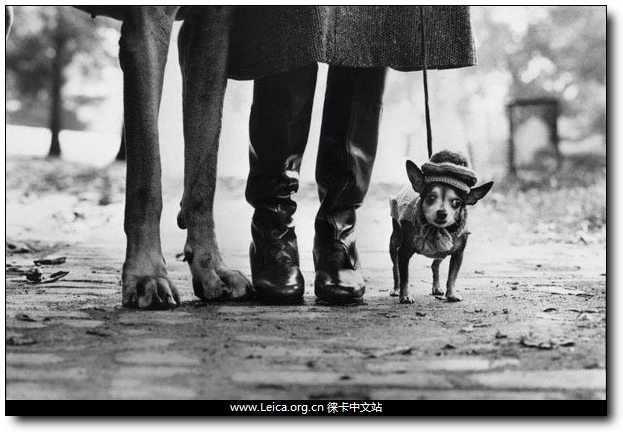
Magnum: New York

摄影师:Elliott Erwitt
拍摄地点:美国纽约
拍摄时间:1974
Elliott Erwitt / Magnum Photos
USA. New York. 1974.

smashingmagazine: cool gadget designs

Innovative Designs and Devices


Steve Jobs stated once that the “design is not just what it looks like and feels like. Design is how it works.” While this statement has proven to be crucial over thousands of years, one shouldn’t misinterpret it by emphasizing the functionality despite the design. When it comes to product design, the significance of aesthetics of a given device, the way its design looks and feels, determines the choice of the customer once the functionalities of multiple devices are more or less similar. If supported by sound user interface and a well-tested, clean implementation, innovative design solutions can drastically enhance the user experience.

This article presents innovative, futuristic gadgets, devices, designs and concepts. Unless explicitly specified, none of these cut-edge concepts is currently being manufactured. None of them is available for end-users which is why neither the price nor links to the stores are mentioned.

Please keep in mind that the main idea of this article is not to do the sell-talk for trendy products, but to showcase innovative design solutions and futuristic devices which can become reality in 2008 or over the next few years.


Sunday, January 6, 2008

NYT: Noontime Web Video Revitalizes Lunch at Desk


In cubicles across the country, lunchtime has become the new prime time, as workers click aside their spreadsheets to watch videos on YouTube, news highlights on CNN.com or other Web offerings.


The trend — part of a broader phenomenon known as video snacking — is turning into a growth business for news and media companies, which are feeding the lunch crowd more fresh content.

In some offices, workers coordinate their midday Web-watching schedules, the better to shout out punch lines to one another across rows of desks. Some people gravitate to sites where they can reliably find Webcasts of a certain length — say, a three-minute political wrap-up — to minimize both their mouse clicks and the sandwich crumbs that wind up in the keyboard.

“Go take a walk around your office” at lunchtime, said Alan Wurtzel, head of research for NBC. “Out of 20 people, I’m going to guarantee that 5 are going to be on some sort of site that is not work-related.”

The midday spike in Web traffic is not a new phenomenon, but media companies have started responding in a meaningful way over the last year. They are creating new shows, timing the posts to coincide with hunger pangs. And they are rejiggering the way they sell advertising online, recognizing that noontime programs can command a premium.

In 2007, a growing number of local television stations, including WNCN in Raleigh, N.C., and WCMH in Columbus, Ohio, began producing noon programming exclusively for the Web. Among newspapers, The Virginian-Pilot of Norfolk, Va., and The Ventura County Star in California started posting videos at lunchtime that have young journalists as hosts and are meant to appeal to 18- to 34-year-old audiences.

The trend has swept across large as well as small independent sites. Yahoo’s daily best-of-the-Web segment, called The 9 and sponsored by Pepsi, is produced every morning in time for lunch. At MyDamnChannel.com, a showcase for offbeat videos, programmers have been instructed to promote new videos around noon, right when the two-hour traffic spike starts.

“Based on the traffic I’m seeing,” said Miguel Monteverde, executive director of AOL Video, “our nation’s productivity is in question.”

From an apartment in Greenwich Village, Rob Millis and Will Coghlan are hosts and producers of a three-minute daily Webcast, Political Lunch, done around 10 a.m., followed by an hour and a half of editing, in time for uploading just before noon. Political Lunch, which was introduced in September and appears on several Web sites, is viewed 10,000 to 20,000 times a week, with a peak in traffic from 1 to 3 p.m.

“It’s an Internet version of appointment viewing,” Mr. Millis said.

One man who takes his midday video schedule seriously is Jason Spitz, a merchandise manager for a major record label in Los Angeles. He trades links to videos with his friends all day — usually low-budget sketch comedy bits from FunnyOrDie.com or CollegeHumor.com — and stockpiles them to watch during lunch breaks. He and his colleagues like to look at the same videos at the same time from their separate desks, turning the routine into a communal activity.

“The clips are shorter than a full 30-minute TV show, so we can cram several small bites of entertainment into one lunch break,” Mr. Spitz said. “The funniest moments usually become inside jokes among my co-workers.”

Noah Lehmann-Haupt, the founder of an upscale car rental company in New York, said that video snacking on short clips is “a good excuse to stay at my desk during lunch, which I prefer since it keeps the momentum of the day going.” He often watches segments from “The Daily Show,” now that Comedy Central has put eight years’ worth of episodes online for free viewing.

Plus, the format leaves both hands free to consume the day’s takeout meal. “I can’t exactly surf while eating, and it’s healthy to step away from e-mails and work for a few minutes a day,” he said.

Some content plays better over lunch. CNN.com, which draws an average of 69 million video plays each month, tends to promote lighter videos in the middle of the day. (“Cloned cats glow in the dark” and “Bulldog straps on skateboard” were among the most popular on a recent weekday.)

At NBC.com and other network Web sites, shorter videos draw more lunchtime traffic than longer ones, which are more often downloaded at night. For that reason, sites like NBC.com emphasize short-form highlights during the day and entire half-hour or hourlong shows in the evening.

From an advertiser’s perspective, the Web is a more flexible medium than television, because technology makes it easy to monitor people’s behavior and adjust programming accordingly. Better still, marketers have found that consumers are up to 30 percent more likely to make a purchase after viewing an advertisement at lunchtime than at other times of the day.

“Not only is advertising volume and Internet use increasing during the 10 a.m. to 1 p.m. time period, but people are actually buying and purchasing and reacting to advertising,” said Young-Bean Song, vice president for analytics at Atlas Solutions, a unit of Microsoft that helps companies with digital marketing campaigns.

Sticking to a set schedule turns out to be almost as important on the Web as it is on television. At blip.TV, a video-sharing site, Mike Hudack, the chief executive, encourages his producers to post videos at the same time each day or week.

“Continuity and consistency is incredibly important,” Mr. Hudack said.

“If you want to attract a loyal audience, you have to give them what they expect when they expect it.”

Wednesday, January 2, 2008