Doug Dowd and his lecture notes
Below is an excerpt from chapter 1.
"
Are we a hopeless species? Saying all this raises an important
set of questions concerning what is usually called human nature.
Neither implicitly nor explicitly is it suggested here that human beings
are naturally sane or reasonable, nor that they are the opposite.
We are, instead, both; but our lives are lived out in a shaping society--whether
that means family, school, or everything else; and it means all
of those. We have in us, that is, both positive and negative, constructive
and destructive possibilities: our species produced Einstein and Jack the
Ripper, Goethe and Hitler, Beethoven and Clinton.
"
Sunday, October 29, 2006

golf notes 2
1) Keep an angle at the wrist. Use the hinge when hitting the ball. 击球时手腕在身体正前方,手臂跟着球杆运动,越慢越好,让球杆自己向前飞,不要急着往上拉。
2) 向右的重心转移不要太大.
2) 向右的重心转移不要太大.
枫叶变玫瑰
Виртуальный урок от Натальи. Вся последовательность изготовления такого замечательного букета - в фотографиях и комментариях.
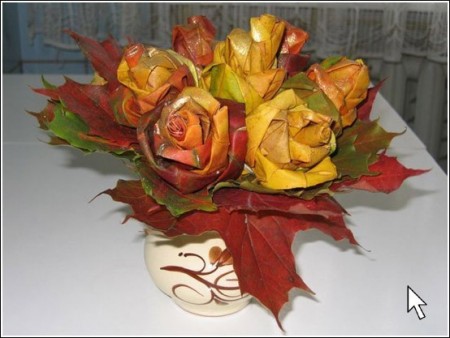
Жмем по картинке или кликаем "Читать дальше ..." и пробуем!
Естественно,
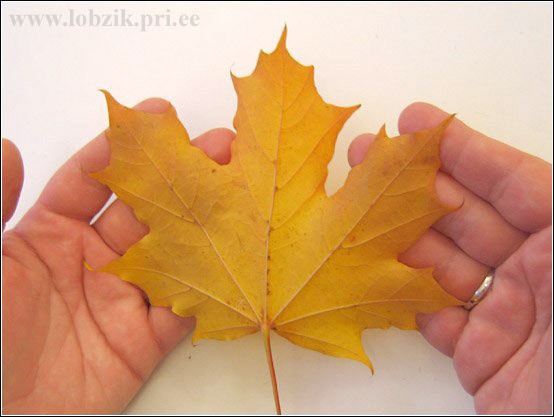
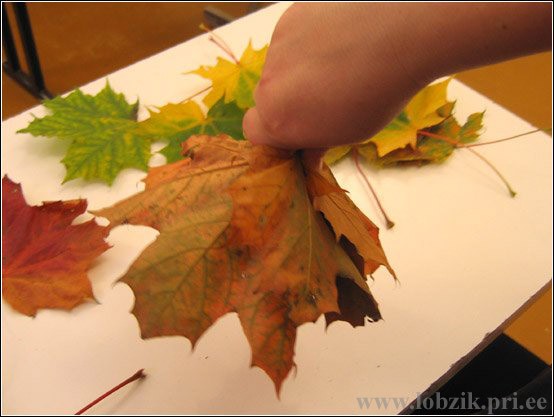
перво-напрево собираем листья. Нам НЕ подойдут слишком маленькие,
сухие, больные, надорванные листья. Цвета же будем использовать разные.

Для одного цветка лучше подобрать листья одного цвета.
Первый лист сворачиваем пополам поперек центральной жилки так, чтобы лицевая сторона оказалась снаружи.
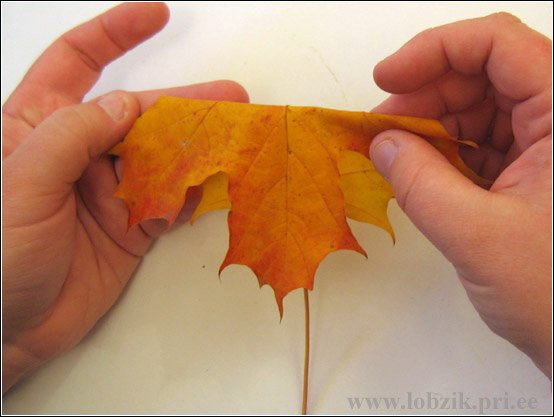
А теперь сворачиваем этот сложенный лист в плотный рулончик.
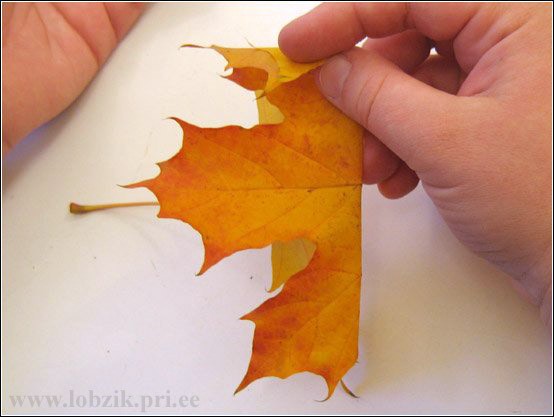
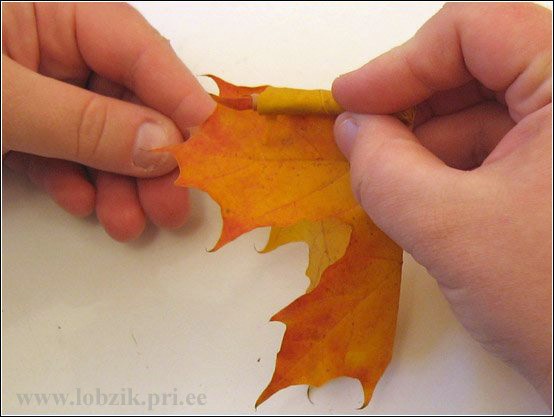
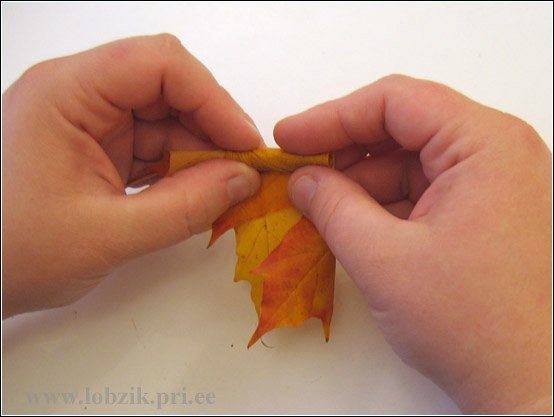
Этот рулончик будет сердцевиной будущей розы.
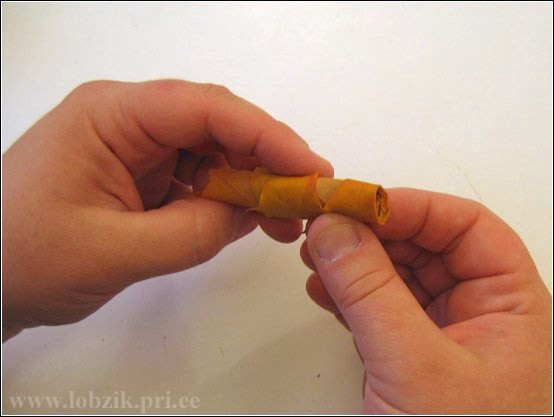
Теперь вокруг этой сердцевины начинаем укладывать "лепестки.
Для начала - берем лист и в центре его размещаем сердцевинку. Заметьте, лицевая сторона листа - внутри цветка!
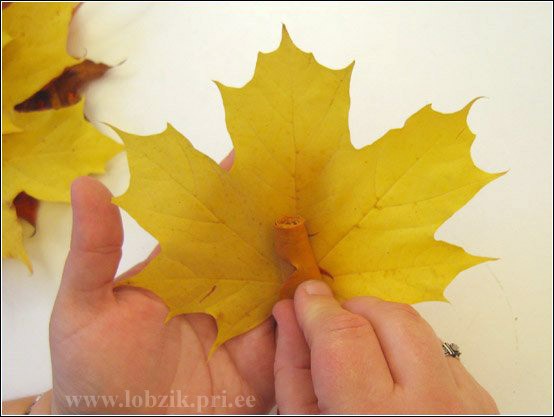
Перегибаем это лист наружу пополам. Кромка перегиба распологается выше сердцевинки на сантиметр-полтора.
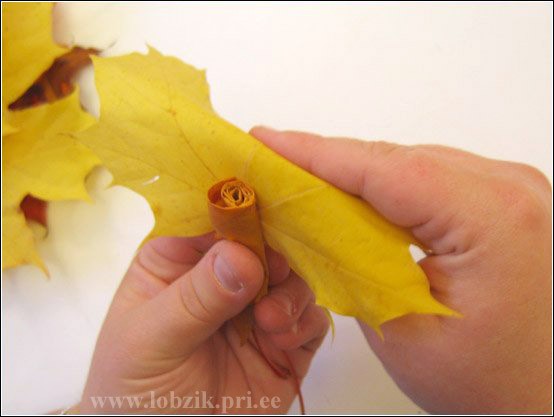
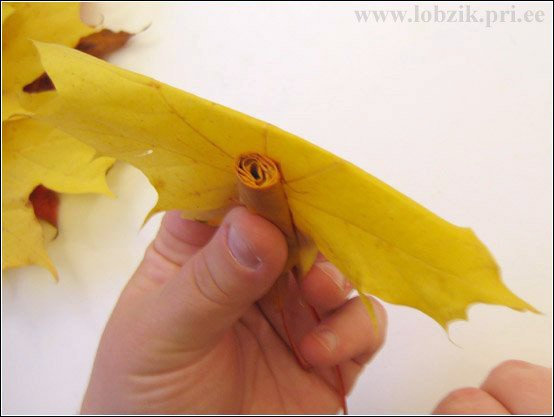
А теперь этот выступающий край тоже отгибаем наружу. Но сгиб уже не разглаживаем ...
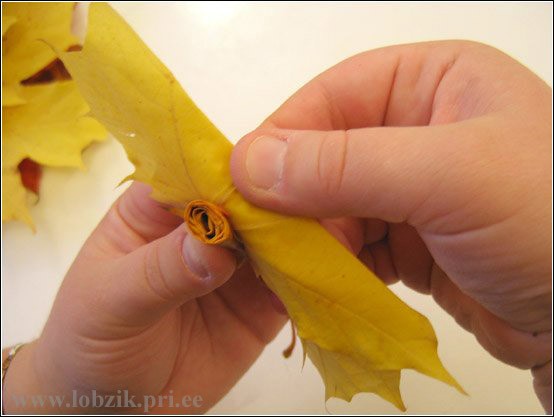
... и боковые края этого дважды сложенного листа обворачиваем с двух сторон вокруг сердцевины.
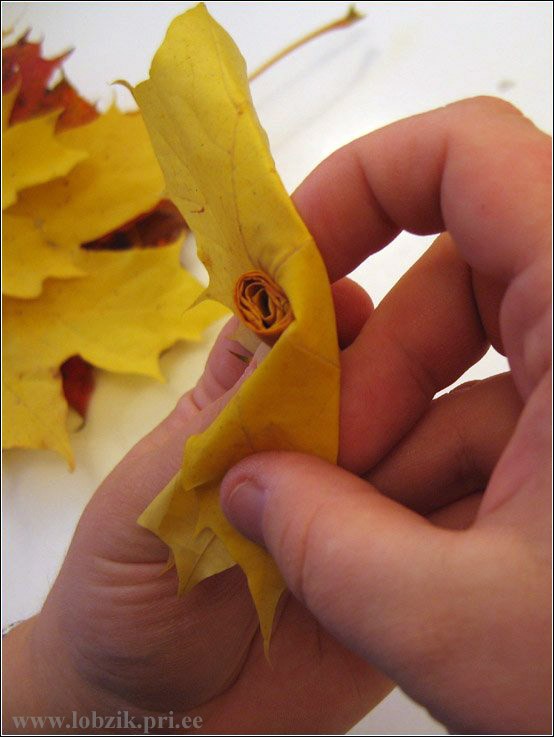
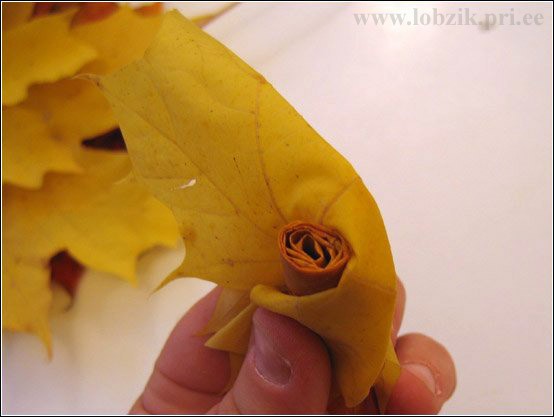
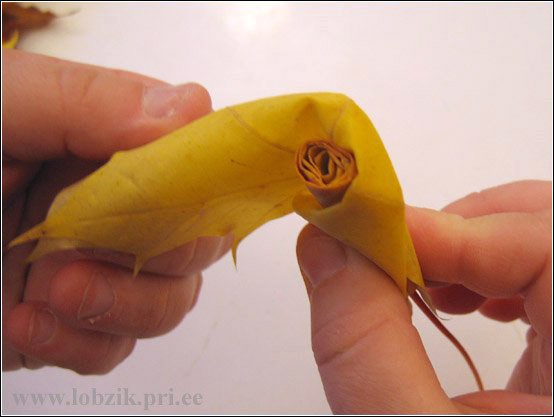
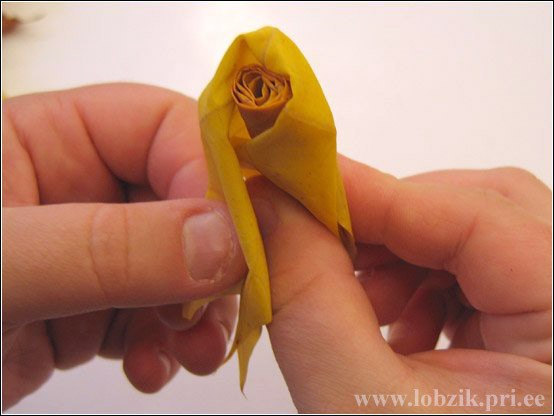
Прищипываем нижние края листа у самого основания цветка.
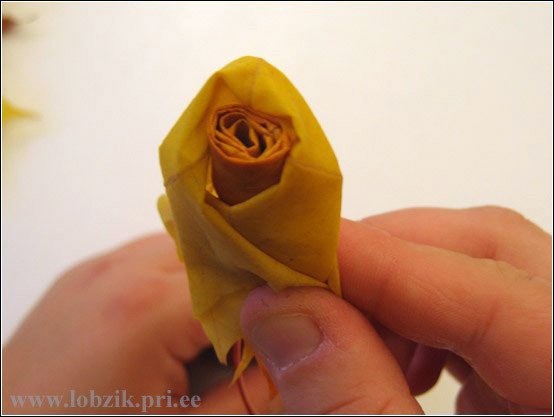
Берем
новый лист для следующего "лепестка" и повторяем только что выполненную
операцию, только этот лепесток расположен с противоположной первому
листу стороны.
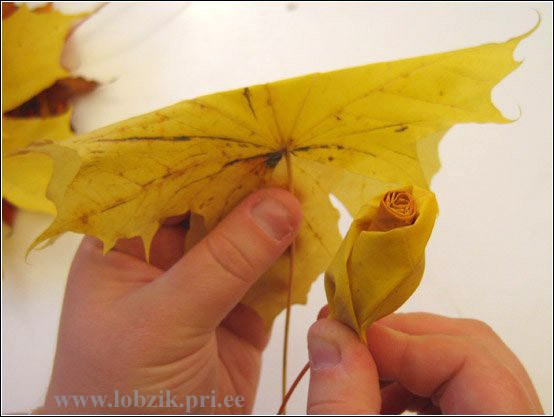
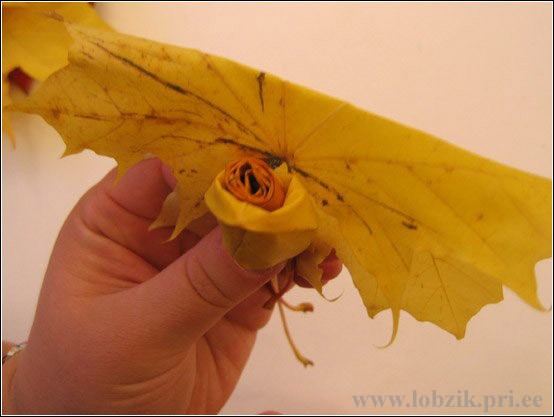
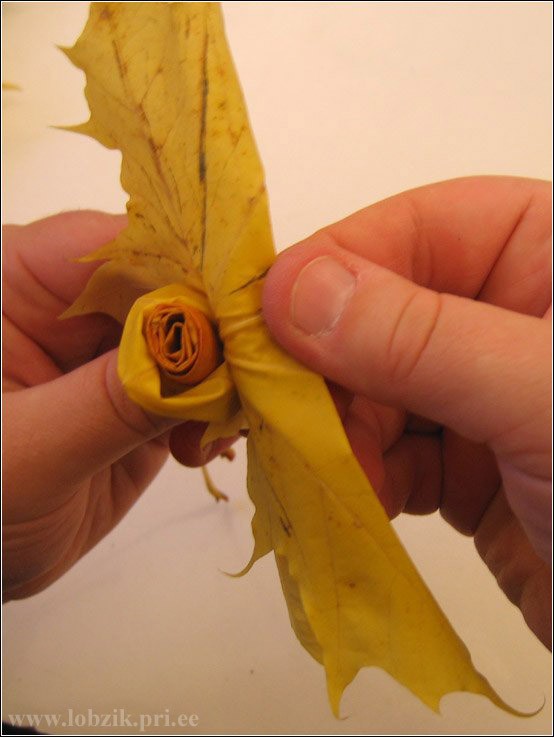
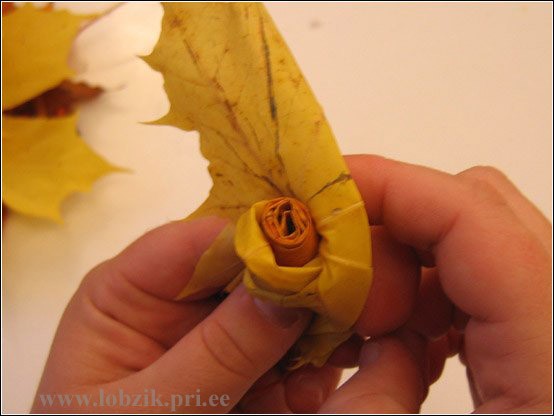
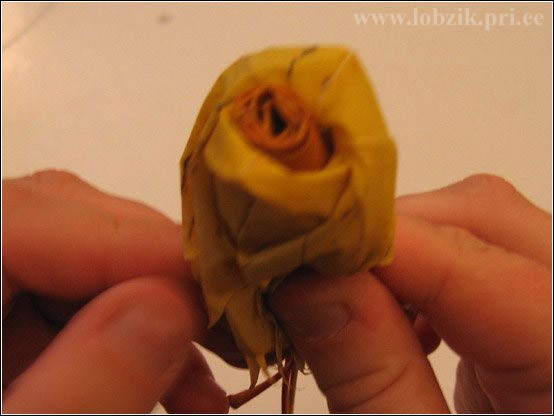
Вот
здесь пропущены несколько однотипных, показанных выше, этапов, когда
лепестки собираются в бутон. Добавляете их, пока вам не покажется
достаточным.
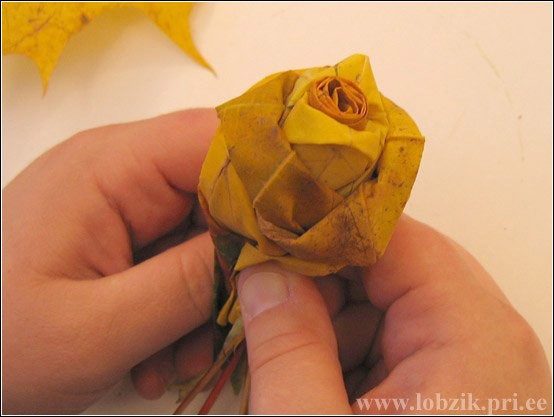
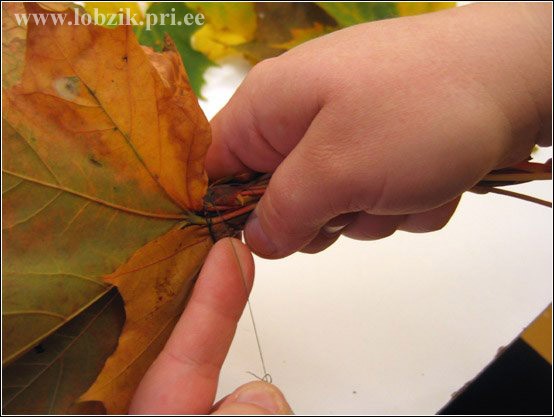
Когда бутон готов, основание его обвязываем нитками, чтобы закрепить цветок.
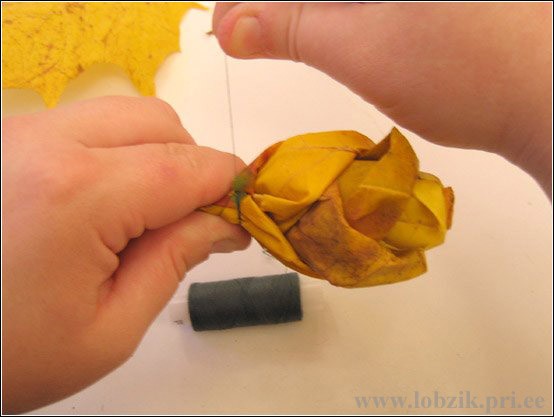
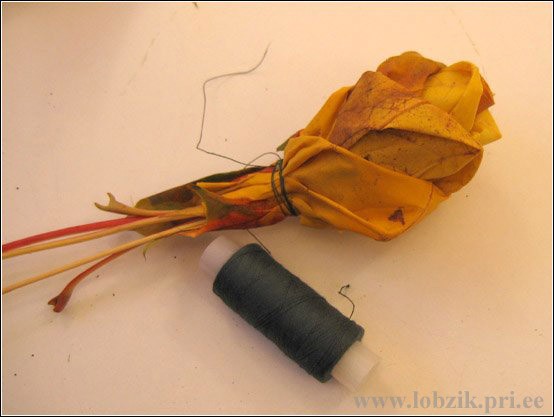
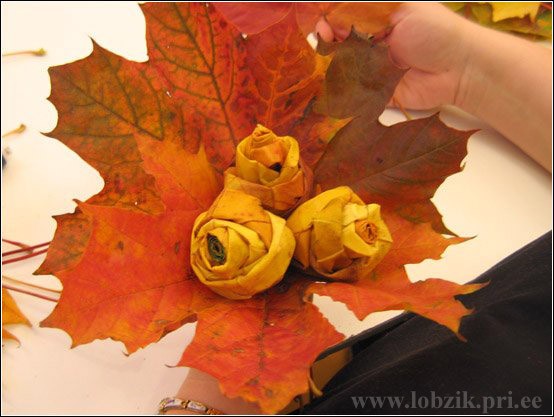
Сколько будет цветков в вашем букете - решать вам. Для этой "фотосессии" нам хватило трех.

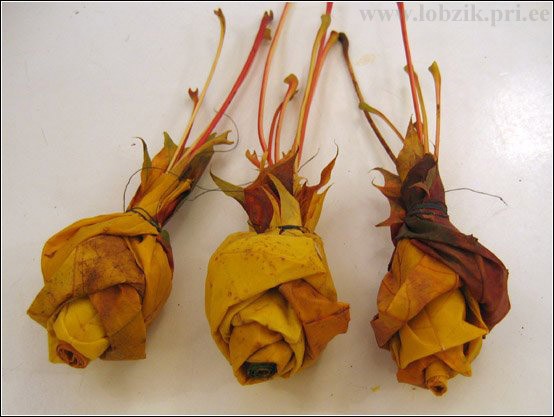
Теперь займемся "зеленью". Сюда подойдут самые пестрые листья.
Для
того, чтобы эти листья не свернулись в трубочку на следующий день при
высыхании, лучше предварительно прогладить их утюгом между листами
газеты. Они станут более хрупкими, но аккуратное обращение не повредит
их.
Равномерно подкладываем эти листья по кругу под бутонами и фиксируем теперь уже готовый букет у основания теми же нитками.
Поверх
ниток, кстати, можно будет обмотать этот узел желтой бумажной
тейп-лентой (малярной лентой), это спрячет нитки и сделает вид более
аккуратным и законченным (на фотографиях бумажной ленты нет).


Thursday, October 26, 2006
My first book just got published
My PhD thesis has been published as a paperback and went on sale at Amazon.
Proquest did a good job packaging it.
Proquest did a good job packaging it.
Wednesday, October 25, 2006
Firefox 2.0
And all the cool add-ons.
A must have. MS sucks, since IE 7 simply wouldn't install on my lappy.
Saturday, October 21, 2006
.com bubble 2.0 and business model innovation
It's be slashdoted that Google's buying youtube could be the start of .com bubble 2.0, where eyeballing and click promise more cash than it could actually translate to.
The move actually starts much earlier, when Yahoo bought MySpace, or even earlier. The irony lies in that Yahoo stock plummeted, while Google still survived, maybe because institutional investors got too much stack in Google and are not ready to let go.
When we fellow MSRA interns asked Kaifu on the burst of .com bubble 1.0 in 2001, he said technology innovation is not enough to make a profitable company sustain, and the business model is the most important innovation. However, one can not patent a business model.
That's why there are so many "me too" social network websites, and video hosting websites. Are they providing value, yes? But are they viable, let alone profitable? I don't see it.
MS is rolling out MSN video, but for the video search part, it licensed the know-how from Blinkx, even though MS research has been doing video search for 6 years and published hundreds of papers. That, again, proves good technology is not enough for good business, assuming MSR's papers are good.
The move actually starts much earlier, when Yahoo bought MySpace, or even earlier. The irony lies in that Yahoo stock plummeted, while Google still survived, maybe because institutional investors got too much stack in Google and are not ready to let go.
When we fellow MSRA interns asked Kaifu on the burst of .com bubble 1.0 in 2001, he said technology innovation is not enough to make a profitable company sustain, and the business model is the most important innovation. However, one can not patent a business model.
That's why there are so many "me too" social network websites, and video hosting websites. Are they providing value, yes? But are they viable, let alone profitable? I don't see it.
MS is rolling out MSN video, but for the video search part, it licensed the know-how from Blinkx, even though MS research has been doing video search for 6 years and published hundreds of papers. That, again, proves good technology is not enough for good business, assuming MSR's papers are good.
Friday, October 20, 2006
To live with grace
To live with the conscious knowledge of the shadow of uncertainty, with
the knowledge that disaster or tragedy could strike at any time; to be
afraid and to know and acknowledge your fear, and still to live
creatively and with unstinting love: that is to live with grace.
-Peter Henry Abrahams
the knowledge that disaster or tragedy could strike at any time; to be
afraid and to know and acknowledge your fear, and still to live
creatively and with unstinting love: that is to live with grace.
-Peter Henry Abrahams
Monday, October 16, 2006
人性之冒险

来源:日本·三木清《人生论笔记》
一旦理解了人生中成功属于本质性的冒险,就使成功主义失去了意义。从冒险的观点来理解成功,还是从成功的观点来理解冒险,二者有着本质的区别。成功主义属于后者,后者并没有真正的冒险。
从现代的冒险心、合理主义、乐观主义,进步观念的混合中所产生的最高精神是企业家精神。就像古代人的理想是做贤者,中世纪人的理想是做圣人一样,可以说现代人的理想是当企业家。
这些综合症你有吗
随着生活方式的不断改变以及工作节奏的加快,五种新的疾病综合症正侵袭现代都市白领。在中国公共卫生发展论坛上,中国疾病预防控制中心的专家提醒,应引起足够的重视。
光源综合症
许多人在办公时习惯把灯全部打开,把整个室内照得亮亮的,殊不知灯光也会给人带来伤害。人在灯光下,时间一长就会造成视神经疲劳,且灯光缺乏阳光下的紫外线,使缺钙所致的老年性骨折、婴幼儿佝偻病不断增多。有专家认为,荧光灯发出的强烈光波,会导致生物体内大量的细胞遗传变性,灯光的过分使用无形中扰乱了生物钟,造成人体心理节律失调,精神不振。
夜餐综合症
夜晚支配胃肠道功能的副交感神经活动较白天强,胃肠道对食物消化吸收能力也强,因而夜生活中,经常进食过多的高热量食品,容易引起肥胖、失眠、记忆力衰退、晨起不思饮食等症状。还由于夜间睡眠不足,人体生物钟被干扰,神经系统的功能发生紊乱,容易诱发神经衰弱、高血压、溃疡病等。
熬夜综合症
城市夜生活的丰富多彩,吸引了更多人加入夜生活的行列,使一部分人逐渐开始形成了晚睡觉的习惯,甚至熬夜,睡眠不足者增多。临床已证实,长此以往,会导致人体神经系统、内分泌系统紊乱,继而出现食欲不振、失眠等症状。
盒饭综合症
工作节奏的加快,使都市白领越来越多地依赖盒饭,这给人们的健康带来隐患。因为经营盒饭的摊点,缺乏食品卫生条件和营养常识,常常使用浓重的调味品,经常食用这种盒饭容易上火,出现咽痛、口腔溃疡、牙痛、腹胀、便秘等症状。另外对一些不新鲜的肉品多采用炸、煎,长期食用容易患上肠胃不调疾病。
时间综合症
时间综合症是指人们对时间的反应过于关注而产生的情绪波动、生理变化现象。时下,快节奏的现代生活,使都市白领感到时间越来越不够用,对事业的专注使人对紧迫的时间感到焦躁不安、紧张过度,这样会引发心率加快、血压升高、呼吸急促等症状。
Shanghai featured on NYTimes
36 Hours
Shanghai

Qilai Shen for The New York Times
The Pudong Financial District seen from the Bund district in Shanghai.
- Published: October 15, 2006
ON a cool autumn night, Shanghai is drenched in light. Billboards are flashing, highway lights are pulsing, and tall buildings seem to have been converted into giant television screens. China’s showcase city appears to be showing off, decorating itself as though it’s Asia’s Las Vegas. This is China’s financial capital, its fashion center and, clearly, its coolest metropolis. Be prepared for a city on steroids, and one banking on long-term hyper-growth. In a country increasingly populated by grimy, characterless cities, Shanghai is also far and away China’s most attractive city, particularly after nightfall.
Multimedia
 Slide Show
Booming Shanghai
Friday
6 p.m.
1) A WALK ALONG THE BUND
The most spectacular view of Shanghai can be seen at night from the Bund, a historic waterfront area that sits on the west bank of the Huangpu River. Hulking stone structures built in the 1920’s and 30’s by the colonial powers that once dominated this city have been handsomely renovated and transformed into upscale bars, restaurants and retailers. Walk along the promenade and look out across the river toward the city’s booming financial district, Pudong, which is packed with futuristic skyscrapers and flashy neon-lit billboards. The Hongkong and Shanghai Banking Corporation, now known as HSBC, once had headquarters on the Bund, and the building’s foyer at No. 12 is gorgeously restored with murals and carvings. Also notable are the Custom House and the Art Deco Peace Hotel (20 Nanjing Road East, 86-21-6321-6888). A building known as Three on the Bund, however, is in perhaps the city’s most impressive location (86-21-6321-7733). The interior was elegantly redesigned by Michael Graves. On the ground level is Giorgio Armani. On the third floor is the hip Shanghai Gallery of Art, where one gets a nice view of the building’s splendid atrium.
8 p.m.
2) RESTAURANT ON RESTAURANT
A nice way to start off a trip to Shanghai is with dinner at Laris, one of the superb restaurants at Three on the Bund. It is decorated in soothing colors and cool marble. From your table, you can often catch a glimpse of the river and Pudong’s space-age skyline. The chef, David Laris, who is Australian Greek, likes fresh ingredients and international flavors. He serves up some wonderful raw oysters; also try the sumptuous beef tenderloin with pancetta and the foie gras terrine with porcini mushrooms (dinner for two, about 790 yuan, or $100 at 8 yuan to $1). On the building’s fifth floor is the Whampoa Club, whose Art Deco entrance — with a touch of Asia — is exquisite. Another winner is Jean Georges Shanghai, the restaurant on the fourth floor named for its creator, the internationally recognized chef Jean-Georges Vongerichten. You can also visit the top floor and New Heights, which has outdoor seating for dinner or simply drinks.
10:30 p.m.
3) A BAR NAMED GLAMOUR
You don’t have to leave the Bund to find a great bar and lounge. Across the street from Three on the Bund is No. 5 on the Bund (entrance on Guangdong Road), home to M on the Bund, a popular dining spot for foreign visitors and China’s nouveau riche. On the sixth floor, the Glamour Bar is one of the best places in the city to relax with a drink. The lounge (86-21-6350-9988) has a 1930’s style decoration with a hip, contemporary twist. Try the litchi martini for about 67 yuan. Just down the road, at No. 18 on the Bund, is Bar Rouge, another stylish fashion bar, often crowded with China’s equivalent of the Hollywood set.
Saturday
10 a.m.
4) PUDONG: THE NEW CHINA
Back in the 1980’s, Pudong was a muddy tract of farmland across the river from downtown Shanghai. But in 1990, it was declared a special economic zone. Today, it’s the fastest-growing part of the city and home to a dazzling new financial district. It also has the city’s most compelling and quirky skyline. Two of China’s tallest structures are here: the Oriental Pearl Tower — a tacky concrete pole that at more than 1,500 feet is the tallest TV tower in Asia — and the nearly 1,380-foot Jin Mao Tower, the tallest building in China and one of the most attractive skyscrapers in the world. Both are fine places for a scenic view of Shanghai’s awesome real estate building boom. Going up on the southeast side of the Jin Mao is Shanghai World Financial Center, which is to be completed in 2007 and expected to challenge Taipei 101 in Taiwan as the world’s tallest building. The new addition to the Shangri-La Hotel (33 Fucheng Road, 86-21-6882-8888) is also a good place for a scenic view, and it has a great bar and an elegant restaurant, Jade on 36, which features a deconstructed rice bowl entryway and glass snuff bottle decorations. The view after dark is just as spectacular. Also of note in Pudong is the new $125 million Shanghai Oriental Art Center, which was designed by the French architect Paul Andreu and, they say, is meant to look like a butterfly orchid blooming in a large glass bowl. The center has three large performance spaces, with the lobby, chamber music hall, concert hall, exhibition hall and opera hall each occupying one of the “petals” of the orchid.
Noon
5) THE FRENCH CONCESSION
Much of the charm of Shanghai lies in the old streets and neighborhoods that make up the former French Concession. While many of Shanghai’s old lane houses are being bulldozed to make way for often ugly high-rise apartment complexes, this district is filled with leafy lanes and Western-style mansions and gardens. Huaihai Road and Maoming Road are populated with trendy boutiques. Several good options for lunch include Shintori, an excellent Japanese restaurant (803 Julu Road by Fumin Road, 86-21-5404-5252) set in a warehouse with a shimmering gray interior, with lunch at 350 yuan weekdays, 70 prix fixe on weekends, or Yin, which offers Chinese on the first floor and Japanese upstairs (Old Jin Jiang Hotel Gate No. 2, No. 59 Maoming Road South, 86-21-5466-5070); 100 yuan for lunch. It’s part of the Old Jin Jiang Hotel, the Art Deco-style complex where Richard M. Nixon and Zhou Enlai signed the Shanghai Communiqué in 1972, an important document that helped re-establish diplomatic relations between the two countries.
4 p.m.
6) AN ART OF ITS OWN
Chinese contemporary art is booming. And while much of it is centered in Beijing, Shanghai is developing its own art district, fashioning cool studios and galleries out
of old warehouses and textile mills. The new arts district here is called M50, or 50 Moganshan Road. The area is not easy to find, but M50 is definitely worth a visit. Some of Shanghai’s best-known artists work here, like Zhou Tiehai, Gu Wenda, Wang Xingwei and Ding Yi. The most interesting gallery shows are held at ShanghART’s H-Space (50 Moganshan Road, Building 18, 86-21-6359-3923). Also, take a peek inside Art Scene Warehouse (Building 4, 2/F, 86-21-6277-4940), which has a large and varied collection of works on display. Or simply wander into the open art studios. Shanghai’s two art museums, both in the People’s Square area, are also worth a visit: the Shanghai Art Museum (which this year is host of the Shanghai Biennale to Nov. 5) at 325 Nanjing Road West (86-21-6327-2829) and the Museum of Contemporary Art at 231 Nanjing Road West (86-21-6327-1282), tucked away in a park and housed in a remodeled greenhouse.
8 p.m.
7) NEW FROM OLD
Xintiandi means “new heaven and earth” and it’s the name of one of Shanghai’s most popular tourist spots. Pronounced shin-tyahn-DEE, this area of upscale restaurants, bars and boutiques is prized because it’s part Disney, part old Shanghai and part Faneuil Hall in Boston. An American architectural firm, Wood & Zapata, splendidly renovated and recreated a district of old Shikumen lane houses — the early-20th-century stone-and-brick edifices that were a blend of European and Chinese architectural styles. While the area is small, and often crowded, it’s now a must-see in Shanghai. Some of the city’s best dining spots are here. Try T8 (8 North Block, Xintiandi, Lane 181, Taicang Road, 86-21-6355-8999); meal for two, from 1,580 yuan. Or, for some of the best Chinese food in town, head to Shanghai Ye (338 Huang Pi Nan Lu, House 6 Xintiandi, by Taicang Road, 86-21-6311-2323); dinner for two, 600 yuan.
10 p.m.
8) DRINKS ON THE OPIUM BED
Finish up your last night in Shanghai by visiting another set of great night spots. Face is one of the most impressive (118 Rui Jin 2 Road, Building 4, Rui Jin Guest House, 86-21-6466-4328). Set in a colonial villa, Face has a bar stocked with cool designs, Asian antiques and even an opium bed where couples can relax with a drink. And if you don’t easily tire, take a taxi to South Beauty 881 (881 Central Yanan Road, 86-21-6247-1581), a spicy Sichuan and Cantonese restaurant with bar and lounge connected to an old French mansion. But one of my favorite spots is a little-known place called the Door (1468 Hongqiao Road, third floor; 86-21-6295-3737), which offers an hourlong musical performance beginning at 10 every night but Sunday. The nine-member band plays modern folk music fused with Western styles. They perform using Western and traditional Chinese instruments, like the erhu and the pipa. There’s also a short Beijing Opera performance. The interior design — which makes stylish use of antiques — is about as good as it gets in Shanghai.
Sunday
9 a.m.
9) THE WAY THEY WERE
A nice place to go to pick up some gifts and souvenirs in Shanghai is the Dongtai Road antiques lanes. Walking through the area will also offer a glimpse of the way some residents continue to live, in crowded apartments, often without indoor plumbing or cooking facilities. The items for sale might include jewelry boxes with Qing dynasty imprints on them, Mao watches, Cultural Revolution-era posters, old coins, books, statues and porcelain. Be prepared to bargain and assume that very little is authentic.
10:30 a.m.
10) BACK FOR BRUNCH
Finish your weekend off by going back to the old French Concession area for brunch at Azul, a tapas restaurant that offers one of the best Western breakfasts in town (18 Dongping Road, near Wulumuqi Road, 86-21-6433-1172). Try the 119-yuan brunch set menu, which will allow you to choose a fresh baby spinach salad, an omelet with basil, sun-dried tomatoes, goat cheese and asparagus, or blueberry pancakes.
The Basics
Shanghai is served by two airports, Hongqiao, which is a 20-to-30-minute ride from downtown, and Pudong International Airport, which mainly caters to long-distance travelers, a little more than an hour’s ride from the city. Flights from New York begin at about $850. Cabs from Pudong generally cost 158 yuan, or $20 at 8 yuan to $1, and there is no tipping. Or you can take the ultrafast maglev train, for 50 yuan but you’ll still have to change to a taxi for 40 yuan to get all the way downtown.
The Grand Hyatt (Jin Mao Tower, 88 Century Boulevard, Pudong; 86-21-5049-1234), across the river from downtown, is the city’s most spectacular hotel; doubles are 1,850 to 3,400 yuan, or $234 to $430. But it’s in Pudong, and while the tunnel is close by, traffic can be a problem. Closer to the center are the Four Seasons Hotel (500 Weihai Road; 86-21-6256-8888; 3,105 yuan) and the JW Marriott Hotel (Tomorrow Square, 399 Nanjing Road West; 86-21-5359-4969; 2,875 yuan). Less expensive is the Donghu Hotel (70 Donghu Road; 86-21-6415-8158; 794 to 1,058 yuan) and the Old Jin Jiang Hotel (59 Mao Ming Road South; 86-21-6258-2582; 1,400 to 1,750 yuan).
Wednesday, October 11, 2006
Golf notes
driving range的几点tip: (use a shorter driver)
发力主要靠肩膀旋转 (头要永远面向着放球的位置,尽量晚动,或不动。要抑制住急着看球往哪里飞的冲动。这样有助于避免向上拉的冲动)
手臂(特别是右臂)要直,越直club向后引得越多。(这一条后来被尤勇刚推翻了,instead, 他建议向后引杆,而不是向上引杆。上身和臀部以脊椎为轴转动,而不是向Waltz一样上下动。要发力时,不是手上用力,而是注意重心从引杆时在右移动到击球时在左,身体在击球的瞬间已经要半open)
手腕要放松找到用锤子敲东西的感觉
击球后,让手臂随着club自由上升,尽量避免向上拉的冲动。
发力主要靠肩膀旋转 (头要永远面向着放球的位置,尽量晚动,或不动。要抑制住急着看球往哪里飞的冲动。这样有助于避免向上拉的冲动)
手臂(特别是右臂)要直,越直club向后引得越多。(这一条后来被尤勇刚推翻了,instead, 他建议向后引杆,而不是向上引杆。上身和臀部以脊椎为轴转动,而不是向Waltz一样上下动。要发力时,不是手上用力,而是注意重心从引杆时在右移动到击球时在左,身体在击球的瞬间已经要半open)
手腕要放松找到用锤子敲东西的感觉
击球后,让手臂随着club自由上升,尽量避免向上拉的冲动。
pitching approach green的tip: (use #9)
open position, 重心向左脚。
最多向后引 5 inch左右
球最好向上挑,飞上green后落地滚动。
club有往地上砸的感觉。
最多向后引 5 inch左右
球最好向上挑,飞上green后落地滚动。
club有往地上砸的感觉。
putt on the green的tip: (use putter)
球在两腿之间。
手臂稍稍弯曲,身体前倾,手腕完全不动(与driving range正好相反)
像钟摆一样,完全用重力,向右引多少,就向左摆动多少。
手腕稍稍有推送球的感觉,而不是敲(与driving range正好相反)
球在两腿之间。
手臂稍稍弯曲,身体前倾,手腕完全不动(与driving range正好相反)
像钟摆一样,完全用重力,向右引多少,就向左摆动多少。
手腕稍稍有推送球的感觉,而不是敲(与driving range正好相反)
Tuesday, October 10, 2006
endorsed by my ex-boss.
Lynn wrote:
"Hanning was one of the best new researchers I've had in my 10 years as a manager at FXPAL. Hanning quickly understood problems and research directions, and equally quickly built prototypes to demonstrate solutions. Hanning is energetic, competent, and intelligent; I am certain he will be very successful."
That's a big boost to my confidence.
middle level management
从曾教授的讲座中节选的:
The middle level is like the torso of a body. Head and limbs are easy. But torso is hard. There is pressure from top and repellent from bottom.
不要功高镇主。先可靠,再能干。
不要存心顶撞上级。使上级安心,员工热心。人上有人,不要把自己看得太高,才能乐在工作。抱着当老二的心情来当老大。
When report to upper level, always speak from his point of view. 讲话讲到对方听得进去,才有用。所以要站在他的立场。
不要存心顶撞上级。使上级安心,员工热心。人上有人,不要把自己看得太高,才能乐在工作。抱着当老二的心情来当老大。
When report to upper level, always speak from his point of view. 讲话讲到对方听得进去,才有用。所以要站在他的立场。
Channel and market is more important than manufacturing.
先小人后君子,丑话讲在前面。
责权往往是分离的。
中国领导只在乎,下属心中有没有我。
事先的准备,比什么都重要。只要去做,就是你的事。替老总做事,才能做老总。把上级的指示作为腹稿,然后自己想办法,用有效的方法传达。直来直往的人是最可怕的。
The westener like discuss, but not compromise.
The eastener can't discuss, and they only compromise.
The eastener can't discuss, and they only compromise.
Friday, October 6, 2006
中秋快乐
To all the friends and friends' friends,
Middle Autumn Festival, as I understand, is a time for sharing good will among friends and family. Wish everybody have a fruitful autumn and enjoy the mooncake.
Eric
Middle Autumn Festival, as I understand, is a time for sharing good will among friends and family. Wish everybody have a fruitful autumn and enjoy the mooncake.
Eric
Thursday, October 5, 2006
夸张
ZEISS Apo Sonnar T* 4/1700 -
The World's Largest Telephoto Lens

Never before has the world of photography seen such a lens. The ZEISS Apo Sonnar T* 4/1700 was developed by Carl Zeiss for a customer with very high demands and a special interest in long distance wildlife photography. To achieve the highest possible image quality, the customer decided on the Hasselblad 203FE 6x6cm medium format camera and ZEISS lenses as the best combination for his special needs.
At a focal length of 1700mm and a speed of f/4, this project even challenged the manufacture of the optical glass. The delicate, special glass types required for this unique design had never been cast before in such huge dimensions. Some of the resulting lens blanks weighed more than 25 kg (55 lbs.) and were valued more than a luxury sedan! Turning these blanks into the finished lens elements added even more to their value.
The design of the ZEISS Apo Sonnar T* 4/1700 required new lens assembly techniques and quality assurance methods never before applied in photo lens production – even by Carl Zeiss’ normally high standards. The finished lens weighs a staggering 256 kg (564 lbs.), placing unique demands on the focusing mechanisms. To address this issue, Carl Zeiss developed a totally new way of operating a telephoto lens, including servo controlled aiming and focusing systems like those used in large telescopes and similar instruments for astronomical scientists.
Drawing from its expertise in developing and producing satellite and space optics, as well as ultra-high resolution microlithography lenses for semiconductor fabrication, Carl Zeiss was happy to accept this challenge.
The resulting Carl Zeiss Apo Sonnar T* 4/1700 lens consists of 15 optical elements in 13 groups. It is the largest telephoto lens ever produced for civilian photographic purposes and a testament to the precision design and manufacturing capabilities at Carl Zeiss.
Photo: Apo Sonnar T* 4/1700: the largest tele lens for non-military applications across the globe.

Sunday, October 1, 2006
LEARNED HELPLESSNESS AND SLEEP: DISCUSSION OF CONTRADICTIONS
VADIM S. ROTENBERG vadir@post.tau.ac.il
Homeostasis, 37 1996, No 1-2
Learned helplessness (LH) is considered to be an experimental
model of depression and/or anxiety (Seligman, 1975, Maier, 1984, Van
der Kolk, 1985, Petty et al, 1994).Sleep structure is a sensitive
marker of human affective disorder in depression (Kupfer, 1976, 1978)
as well as in anxiety (see Rotenberg, Boucsein, 1993): REM latency is
decreased and first REM period is often increased. A genetic animal
model of depression - Flinders Sensitive Line rats - demonstrate an
exaggerated immobility when exposed to mild stressors, and this
immobility is accompanied by an increased REM sleep amount and reduced
REM sleep latency (Overstreet et al, 1994).
The first fundamental study of sleep in LH was performed only
recently (Adrien et al, 1991 a, b). Avoidance training was initiated 48
hours after the initial inescapable shock preconditioning. Rats were
placed individually in shuttle-boxes and subjected to 30 avoidance
trials with 3 sec light signals. If no response occurred during these 3
seconds, shock was presented for maximum 3 sec. Avoidance sessions were
performed on days 2, 4, 8 and 11 morning, between 10 and 11, and the
sleep - wakefulness parameters were collected during the 15 day
recording period. After initial inescapable shocks all rats were
divided into 3 groups one which was submitted to paradoxical sleep (PS)
deprivation using the platform technique, one which stood on a large
platform, and one which was not submitted to the platform protocol. The
two former groups were placed on their respective platforms from 17 00
until 10 00 the next morning. From 11 00 until 17 00 after training
sessions rats were housed in their home cages and allowed to sleep
freely.
This study seems to confirm the similarity between LH and
depression: PS requirement was slightly increased after LH training,
while PS deprivation (PSD) induced a reversal in the escape failures -
in helpless rats the index of helplessness was significantly lower in
the PS deprived group than in both control groups. Consequently, the
outcome of PSD in LH seems to be in the same direction as the outcome
of PSD in depression (Vogel, 1975): LH became less prominent.
In a recent study Maudhuit & Adrien (1994) have shown that
in rats repeated short lasting PS deprivation had the same behavioral
effect as the subchromc treatment with antidepressants in the LH
paradigm. PS deprivation altered also the response of raphe dorsahs
neurons to 5HT reuptake blocker in the same way as a chronic treatment
with antidepressants.
However, the relationship between LH and PS seems not to be so
simple and it is worth-while to analyze data of this investigation in
detail.
In Adrien's study, inescapable shocks have been presented
as a pretraining procedure for 1 hour. Whether such procedure by itself
caused LH or not, remains unknown, because after this procedure animals
were not tested. It is possible to hypothesize that LH was not induced.
The sleep structure after inescapable shocks was significantly
different from the sleep structure after LH induction. PS latency was
increased and PS was reduced. Adrien's explanation that these
alterations of the sleep structure were caused by an acute stress is
plausible because the control groups demonstrated similar alteration
after their first exposures to shocks, though escapable.
According to the Search Activity concept (Rotenberg &
Arshavsky, 1979, Rotenberg, 1984, 1993, 1994), acute and short lasting
stress is usually accompanied by search activity and reduced PS
requirement. Search activity is defined as an activity which may change
the situation (or at least the subject's attitude to it) in absence of
a precise prediction of the outcome. Search activity can be regarded as
a psychobiological state which covers self-stimulation in animals,
creative behavior in humans, as well as exploratory and active defense
behavior (Fight/Flight) in both species. The opposite state,
renunciation of search, is manifested in neurotic anxiety and
depression in humans, in freezing in animals, and also in LH, panicky
behavior and stereotyped behavior in both species. It was shown
(Rotenberg & Arshavsky, 1979a, Rotenberg, 1984) that all forms of
behavior which included search activity increased body resistance to
various forms of artificial and natural pathology, while renunciation
of search decreased body resistance and accelerated the development of
artificial pathology. According to the Search Activity concept, the
function of PS is to compensate the deficit of search activity, if such
deficit had accumulated in the previous wakefulness and to restore
search activity for the subsequent wakefulness. As a result, search
activity is expected to decrease and renunciation of search to increase
the REM sleep requirement (see for details Rotenberg, 1984, 1993).
The experimental group of Adrien's animals which had received
the initial experience of inescapable shocks, displayed LH upon
exposure to the first session of escapable shocks, while the amount of
PS was positively correlated to the index of helplessness. According to
these data it is possible to suggest that the exposure to inescapable
shocks was too short to produce LH by itself, but caused acute stress.
However, search activity which was displayed by the animal in this
state of acute stress does not help it to avoid the punishment and
that's why the animal was predisposed to the development of LH in a
similar situation. When the animal was exposed once more to the shocks,
though escapable, the previous experience of the inescapable shocks
caused a disorganization of behavior and blocked the animals' ability
to recognize that these shocks are escapable. This conclusion is in a
good agreement with data that a previous inescapable stress sensitizes
the hippocampus to an increased norepinephrine release in response to a
subsequent smaller stressor /Petty et al, 1994) which is followed by
eventual depletion (Tsuda et al, 1986) and predisposes animals to LH
(Irvin et al, 1986, Martin et al, 1987). At the same time the animal in
Adrien's investigation does not have sufficient information to predict
that the recent shocks would be restricted in time and space. As a
result, these shocks caused a generalized LH, and the PS requirement
was increased . Such an outcome was predicted by the search activity
concept which considers generalized LH as a renunciation of search.
However, it is necessary to explain why the LH related increase
in PS was only transient and disappeared in subsequent sessions,
although the helpless group exhibited significantly more escape
failures than controls during all shuttle box sessions (Adnen et al,
199la). I suggest that the plausible explanation is that the nature of
LH was changed in the course of the shuttle box sessions. The animal
learned that the shocks are limited in time and space. As a result
generalized LH has been replaced by a conditioned LH tied only to
specific conditions. The animal remains active in all other situations
(Abramson et al, 1978). Such restricted LH does not contribute to
renunciation of search as a global state and does not require an
increase in PS. The term "learned helplessness" seems to be appropriate
only for the conditioned LH, while the global LH is rather
"renunciation of search". This approach may be crucial for
understanding different outcomes of chronic stress. It has been shown
(Yehuda et al, 1993) that the activity of the
hypothalamus-pituitary-adrenal axis may drop in conditions of repeated
or chronic stress. In rats, daily administration of stressors (forced
swimming, noise, immobilization, cold) led sometimes to a gradual
attenuation of the stress response. In other cases, the adrenocortical
response persisted and lead to numerous somatic disorders. According to
Yehuda et al, 1993, the severity, controllability and/or predictability
of the chronic stressor may impede habituation.
Chronic stress can cause physiological deterioration and
exhaustion if combined with a generalized helplessness ("renunciation
of search") whereas conditioned helplessness is associated with
attenuated hormonal response. Exactly in this condition a
superimposition of a novel, acute stressor can increase the attenuated
ACTH level (and brain norepinephrine release and synthesis, Valentino,
1994) because search activity is not inhibited.
The second important question is why PS deprivation induced a
reversal of the escape failures in helpless rats (Adrien et al, 1991).
According to the Search Activity concept PSD on a small platform can
cause LH by itself because animal is restricted in its behavior, cannot
perform the search activity, is continuously punished for attempts to
satisfy its natural need in PS, and is thus unable to compensate
renunciation of search in PS. Long lasting PS deprivation causes a
decrease in aggresive and exploratory behaviors and induces passive and
depressive behavior probably due to the exhaustion of brain
catecholammes (see Current Research of Sleep and Dreams, 1966,
Mollenhour et al, 1977). However, a short-lasting PS deprivation
usually causes an opposite reaction: the animal becomes overactive and
overmotivated. Interestingly, the same nonmonotonous relationship
between the duration of the treatment and behavior characterizes the
development of LH after the first exposure to the inescapable shock -
the animal becomes overactive in the open field and PS requirement is,
therefore, not increased - while later LH is formed and behavior
becomes passive (Overmier, Seligman, 1981).
A common mechanism might be suggested: if the exposure to
frustrating conditions (e g PS deprivation on a small platform or
inescapable shock) is short the animal demonstrates a "rebound,, search
activity. In Adrien's study (1991b) the group of animals with the
conditioned LH was exposed to a short-lasting PS deprivation before
training sessions. Such deprivation was not strong enough to cause
generalized LH, and in addition was accompanied by PS rebound during
subsequent sleep. Moreover, the increased drive for search activity
induced by a short lasting restriction of motor and search behavior on
the small platform induced a "rebound"- exaggerated motor behavior in
the subsequent wakefulness (Rotenberg et al, 1986). The stay on the
large platform was not so frustrating and did not induce the "rebound"
hyperactivity.
PS deprivation in animals and in depressive patients should
not, however, be directly compared. In depressive patients, the PSD
suppresses a functionally deficient PS which is not effective in
restoring the search activity (Rotenberg, 1994), PS deprivation has
therefore a positive effect. In animals PSD excludes a functionally
efficient PS, and has therefore a deleterious effect. The subsequent
activation of the behavior takes place only if the deprivation is short
and the brain resources for search behavior are not exhausted. In
depression these resources are already decreased before PS deprivation.
老妈语录
周六带老妈去Mt. Rainier看红叶。回来以后她老人家说:
"这座雪山叫‘瑞年’是对的, 瑞雪兆丰年嘛。"
--------------------------
第一眼看到Mt. Rainier, 老妈说,"这么高的山莫去爬。还有雪。" 天知道她以为summit Mt. Rainier是跟Fremont的Mission Peak一样的day hike。
我忙解释,我们只是在山脚下走走。
--------------------------
走完Trail, 老妈认为这趟虽然费了几个小时的车程,还算不错。
下山前,在visitor center, 她拿到一份中文介绍,上面说Mt. Rainier是世界上最雄伟的山之一,于是她立刻对"雪山"增添了几分敬仰。时候逢人便说看到“大雪山”, 太值得了!
她老人家,还是更加相信白纸黑字。
--------------------------
老妈评论Seattle时说:
"这地方好是好,但是还是不如旧金山。"
我忙问其详。
老妈说,“交通不方便,从国内直飞的航班太少。阴天太多。”
我都点头同意,但是最后一条令我faint.
"而且没有二手货市场。"
天知道自从去过一次San Jose的二手货市场,那里就成了老妈评价美国所有商品价格的指标。无论去Macy's 还是 JCPenny, 老妈必然说,这东西如果在旧金山的二手货市场,只要多少多少。
我只好告诉她,这边有Craigslist, 可以在网上买。
“那网上不安全。国内有好几起网上信用卡被盗的。”
总之,没有二手货市场,就是Seattle的一大disadvantage。
--------------------------
老妈虽然不相信网上二手货交易,但是对网上的其他新闻,还是言听必信的,比如她去海边时就会问,今天潮水会涨多高啊,莫像网上那样,太危险了。她印象中的"涨潮"情景,是网上印尼海啸的录像。
"这座雪山叫‘瑞年’是对的, 瑞雪兆丰年嘛。"
--------------------------
第一眼看到Mt. Rainier, 老妈说,"这么高的山莫去爬。还有雪。" 天知道她以为summit Mt. Rainier是跟Fremont的Mission Peak一样的day hike。
我忙解释,我们只是在山脚下走走。
--------------------------
走完Trail, 老妈认为这趟虽然费了几个小时的车程,还算不错。
下山前,在visitor center, 她拿到一份中文介绍,上面说Mt. Rainier是世界上最雄伟的山之一,于是她立刻对"雪山"增添了几分敬仰。时候逢人便说看到“大雪山”, 太值得了!
她老人家,还是更加相信白纸黑字。
--------------------------
老妈评论Seattle时说:
"这地方好是好,但是还是不如旧金山。"
我忙问其详。
老妈说,“交通不方便,从国内直飞的航班太少。阴天太多。”
我都点头同意,但是最后一条令我faint.
"而且没有二手货市场。"
天知道自从去过一次San Jose的二手货市场,那里就成了老妈评价美国所有商品价格的指标。无论去Macy's 还是 JCPenny, 老妈必然说,这东西如果在旧金山的二手货市场,只要多少多少。
我只好告诉她,这边有Craigslist, 可以在网上买。
“那网上不安全。国内有好几起网上信用卡被盗的。”
总之,没有二手货市场,就是Seattle的一大disadvantage。
--------------------------
老妈虽然不相信网上二手货交易,但是对网上的其他新闻,还是言听必信的,比如她去海边时就会问,今天潮水会涨多高啊,莫像网上那样,太危险了。她印象中的"涨潮"情景,是网上印尼海啸的录像。
Subscribe to:
Posts (Atom)